
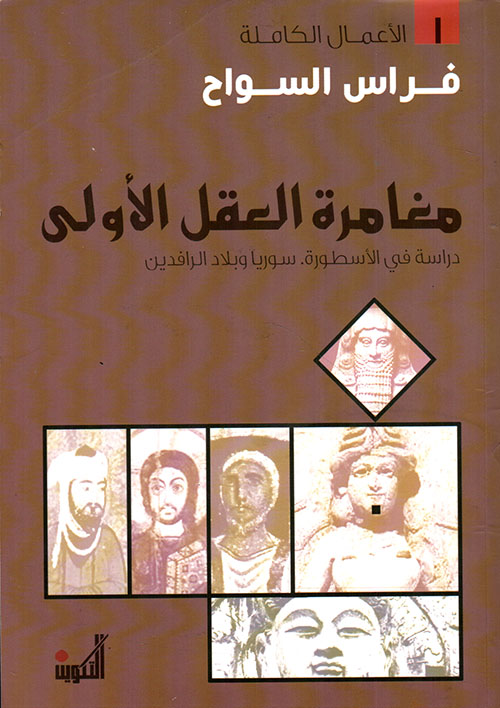
Description
“My concern has always been to search for the unity of human spiritual experience throughout history, regardless of the source of religious experience, whether it is of some inherited origin or the product of human experience and spiritual striving.”
Although scientific thought refuted the value of myth in the eighteenth century, the artistic and aesthetic revolution of the nineteenth century restored its luster as a source of art, religion, and history. The humanities then turned to searching, beyond its apparent form, for hidden symbols and profound meanings to understand humanity, its behavior, and its spiritual and psychological life. The thinker Firas al-Sawah then presented a mythological study of the myths of the ancient Near East, particularly Syrian and Babylonian myths, to uncover the psychological, historical, and economic meanings and symbols they hold. He clarified that myth is not mere fable or folk tale, but rather the first attempts by the human mind to understand its own nature, the origins of the universe, and the cosmic phenomena it presents—phenomena it was unable to explain or confront. Thus, humanity resorted to myth, which was formed within a historical, psychological, and cultural context, reflecting its imagination, fears, and aspirations, and shaping its religious beliefs.














Reviews
There are no reviews yet.