
Description
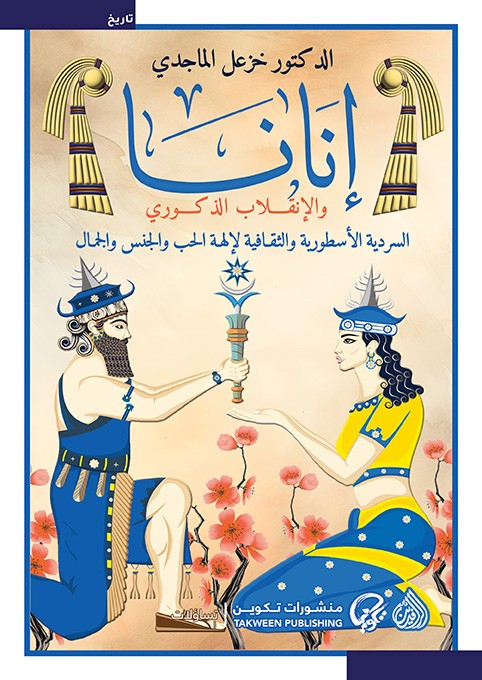
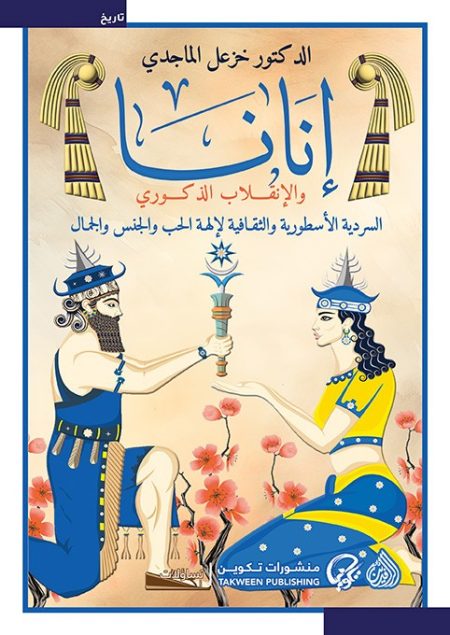
The goddess Inanna is the first goddess of love and beauty in history, but she did not enjoy her love and beauty. She was a model of femininity destroyed by the prevailing patriarchy, which distorted her heart and beauty. The legend of this virgin goddess is not limited to her relationship with Dumuzi, but begins with her appearance in the sixth millennium BC, alongside the mother goddess, both of whom were wronged by the male revolution, and continues until her end and disappearance. Therefore, we will examine the history of this goddess from her first appearance in prehistoric times until her transformation into a fierce and destructive goddess, then her replacement by Ishtar, and finally her fading and absorption into other goddesses. Her epic battle with Dumuzi will be the central axis upon which this history rests.
We have concluded that Inanna can be the central and fundamental concept in the patriarchal revolution against the mother goddess. The goddess Inanna is the first shining example that implicitly explains how this revolution occurred and its stages within the female deity, as well as its manifestations in her life and history. Thus, the sky god Anu led the patriarchal revolution and wreaked havoc on the female deity, reducing her to a state of ruin that encapsulates what happened to most women throughout human history. Women were humiliated by the men who surrounded them, and were only honored as elderly mothers of men, a mere form of superficial consolation.
Our book explains all of this in detail and observes the subtle transformations Inanna underwent until she reached her final, wretched state. It was only natural that the Akkadians would elevate her to the status of a battle queen, a bloodthirsty figure, a role that would be starkly reflected in the Babylonian and Assyrian Ishtar and her Syrian counterpart, Anat.

Reviews
There are no reviews yet.