
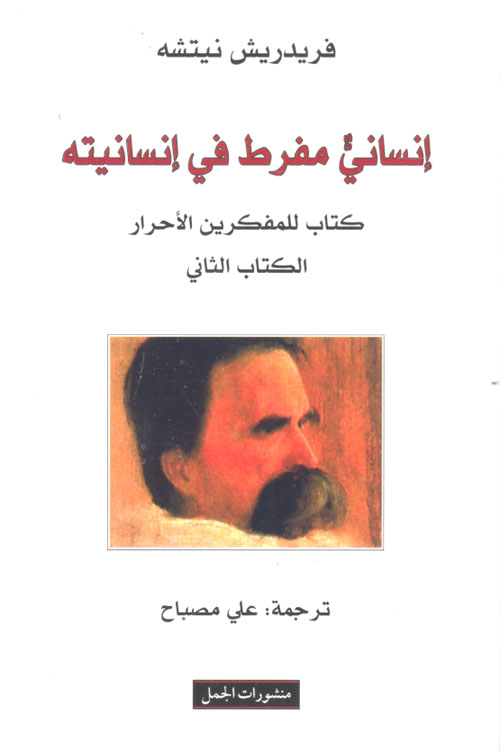
Description
The machine, a product of the highest intellectual faculty, is used by those who employ it only for their base energies, not for thought. In doing so, it unleashes a tremendous amount of energy that would otherwise remain dormant—this is true—but it does not propel one to transcendence, to do better, to become an artist. It merely keeps one active, repeating the same work regularly, but this incessance provokes a reaction, arousing in the soul a despairing boredom from which one learns to aspire to the pleasures of idleness.
In the introduction to his book, Nietzsche, in his opposition to Romantic pessimism—that is, the pessimism of the marginalized, the deficient, and the defeated—says: “The will to tragedy and pessimism is a sign of rigor and intellectual strength (the strength of taste, feeling, and consciousness). Where this will resides in our hearts, we no longer fear the terrible things in existence; rather, we seek them out. Behind this will lies courage, pride, and the desire to have many. This has been my pessimistic perspective from the beginning. A new perspective, it seems to me? And it remains a new and strange perspective today, and I am still attached to it, whether it is in my favor or sometimes against me…”
Thus Nietzsche began practicing this kind of discourse in his book, a discourse mastered only by the steadfast and those suffering the most… He speaks of things in which he has no interest whatsoever, feigning to find some benefit in them. It was then that he learned the art of appearing cheerful, objective, curious, and, above all, healthy and rude—which, in his view, constituted “good taste” for the sick.
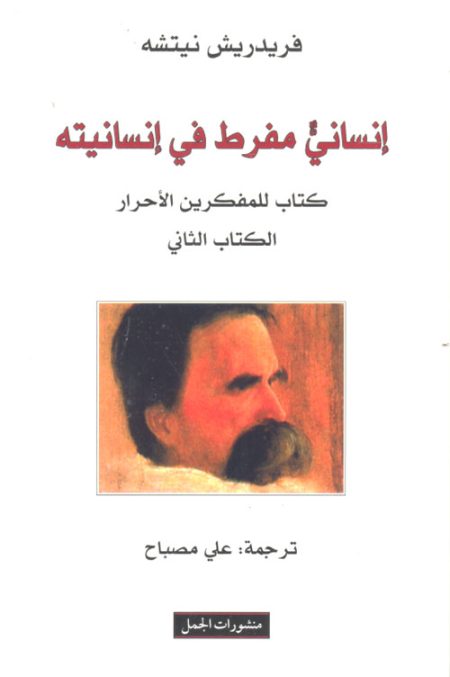
In this book, Nietzsche wrote a story of illness and recovery, for the entire matter revolves around recovery, a purely personal experience, merely that “all-human” aspect of his personality. He had already published “Mixed Opinions and Judgments” and “The Wanderer and His Shadow” in two separate books, each a continuation and supplement to this book for free minds, “Human, Solitary in His Humanity,” which he considered simultaneously a continuation and reiteration of a cultural remedy, a spontaneous cure from Romanticism, crafted by his own untainted instinct. Six years after his recovery, he presents these works to the reader in this book, the second part of “Human, All Too Human.” Perhaps this collection can convey Nietzsche’s teachings and philosophy to people with greater force and clarity—teachings on health that will encourage the demanding minds of the rising generation to voluntarily adhere to them. Nietzsche says that the speaker in this book is a pessimist who often sheds his skin, but always returns to it; he is, therefore, a pessimist inclined toward pessimism, and thus not romantic in the long run. And what is wrong with that? Doesn’t a mind that has, like a snake, mastered the art of shedding its skin have the right to teach a lesson to the pessimists of our time, who are still haunted by the dangers of romanticism? To show them, at the very least, how to do so? This is Nietzsche’s philosophy of life, presented through the texts of this book, demonstrating that there is still ample room for philosophy in thought.










Reviews
There are no reviews yet.