
Description
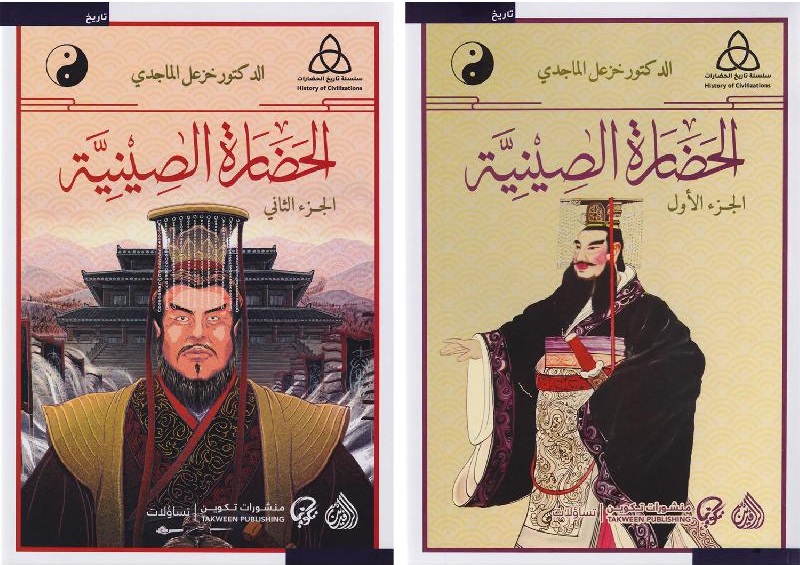
This book comes at a critical and delicate juncture, as the world’s contemporary civilization is beginning to shift from unipolarity to multipolarity. China will be the first pole of this multipolarity. The first part of this book comprises nine chapters, preceded by an introductory chapter that introduces China, Sinology (the study of China), and its leading figures.
Chinese civilization is one of the greatest civilizations in human history. It is distinguished from other world civilizations by its antiquity and continuity until 1912. Despite its decline as an ancient civilization, modern China’s connection with those ancient roots has been inspiring and unique. Today, it rivals the world’s largest nations and is considered a new path to modernization.
The second part of the book, “Chinese Civilization,” begins with Chapter Nine, which focuses on the social aspects, characteristics of Chinese society, its structure, social classes, and their dynamics. Chapter Ten discusses the psychological aspects of the individual and society, the general characteristics of social psychology, and its relationship to civilization. Chapter Eleven addressed matter, energy, and their resources in ancient China, as well as labor and technology. Chapter Twelve explored the religious landscape, beginning with ancient Chinese magical religions, then moving to theistic religions, philosophical religions such as Taoism and Confucianism, Chinese Buddhism and its various branches, and finally, medieval and modern religions. Chapter Thirteen examined Chinese sciences and their mathematical and natural technologies. Chapter Fourteen explored Chinese arts, including visual arts, applied arts, dance, music, singing, opera, and Chinese theater, tracing its origins and history. Chapter Fifteen discussed Chinese ethics, which characterize and govern Chinese civilization, and their role in the balance and imbalance of that civilization. In the concluding chapter, we assessed and evaluated Chinese civilization in light of the elements presented in the preceding chapters, examining the reasons for its rise and fall, and its unique and unprecedented achievements.











Reviews
There are no reviews yet.