
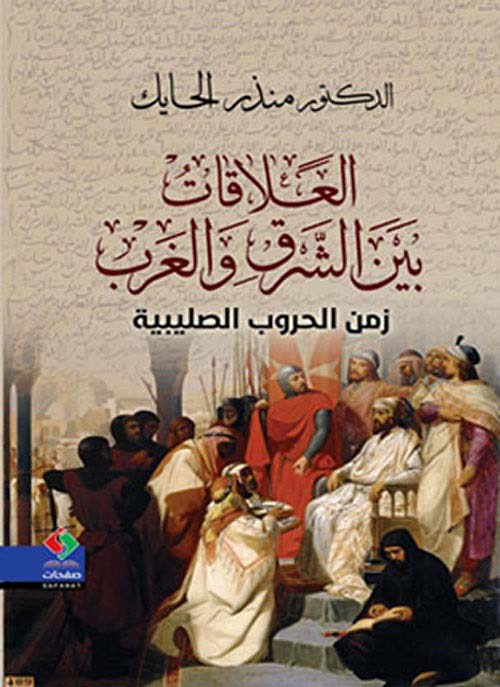
Description
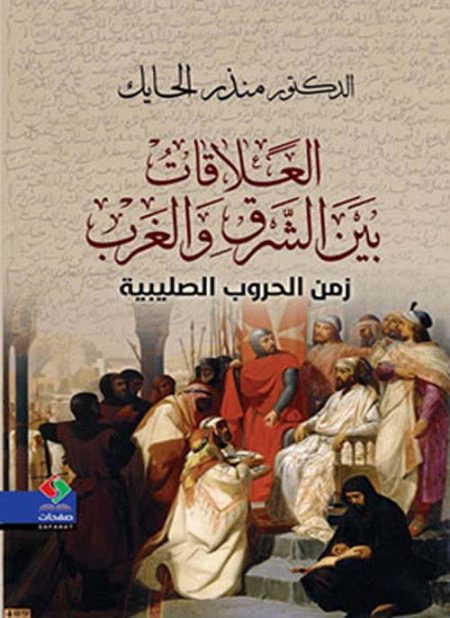
In a turbulent period of world history, Europe, with all its human and material resources, attacked the Levant to conquer it and establish a Latin Christian state. At almost the same time, the Mongol invasion swept through, leaving no stone unturned, and ravaged the Islamic East, reaching as far as the Levant. Just as the European dream was shattered at Hattin, the Mongol advance was halted at Ain Jalut.
What were the relations between states during this era of momentous events that engulfed the entire world? These events included world wars and diplomatic relations that spanned all the continents of the Old World. This complex and perplexing question is answered by the book before us. It examines international relations, in their most important political and military forms, as they unfolded between most of the states of that era and the Ayyubid state, which constituted a central point in international relations because it was situated on land contested by the major world powers. The book examines the relationships of numerous and diverse states, peoples, and military and political powers, including some internal forces such as Bedouin tribes and influential ministers and leaders, as well as many large and small states, such as the Mongol Empire, the Khwarazmian Sultanate, the Seljuk Sultanate of Rum, the Atabeg states and Artuqid emirates, the Sharifian emirates of the Hejaz, the Ismaili sect, the Mamluk Sultanate, the Almohad Emirate, the Byzantine Empire, the Kingdom of Armenia, the Kingdom of Georgia, Nubia, the Frankish Kingdom of Jerusalem and its principalities in Antioch and Tripoli, the Papacy, the Italian republics of Venice, Genoa, and Pisa, the Holy Roman Empire, the Kingdom of France, the Grand Duchy of Austria, the Kingdom of England, the Kingdom of Hungary, and the Flemish people.
After all this, we find ourselves face to face with the political reality and diplomatic practices of nations living in an era that knew only force and violence to resolve its problems or achieve its ambitions. Military solutions were the only option that came to mind, even though, even in that era, there were those who reached out across religious and national borders seeking to live in peace.

Reviews
There are no reviews yet.