
Description
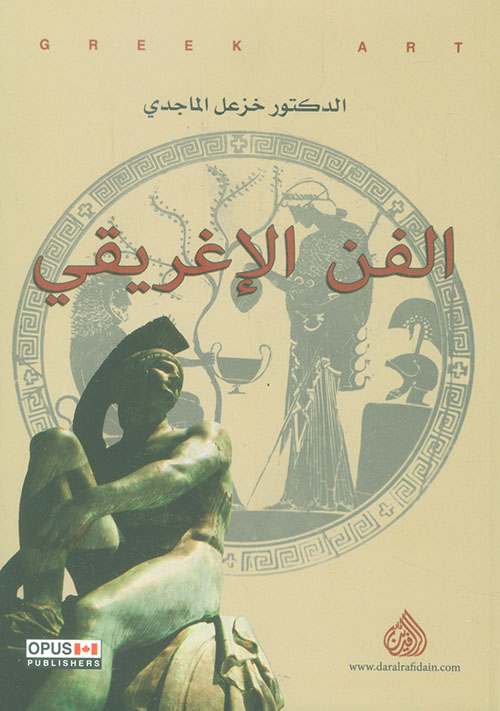
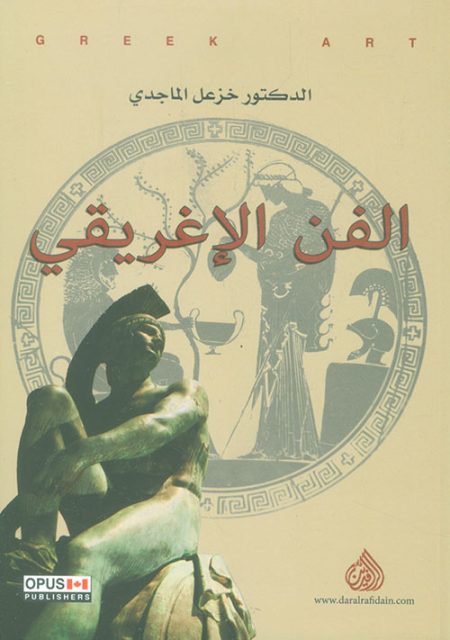
The book “Greek Art” by researcher Dr. Khazal Al-Majidi. Al-Majidi likens this art to “a tree whose roots are submerged in the sea of Aegean arts, whose trunk sprouts in the early stages of ancient Greek art (geometric, Oriental, and classical), and whose branches and ripe fruit appear in Classicism, before descending into the baskets of Realism with the Hellenistic and Late periods.” The book comprises an introduction, eight chapters, and indexes. Each chapter addresses the art of its respective period within the four art sectors, presenting a comprehensive picture of all these arts. The treasures of Greek art history are displayed with precision and clarity, accompanied by photographs. The novel aspect this book will reveal is the threefold intervention of Eastern Mediterranean art in the emergence and revitalization of Greek art. The first instance was with the beginnings of Aegean art in the third and second millennia BC; the second was in Oriental art during the eighth and seventh centuries BC; and the third was in Hellenistic art during the third century BC. This fact, often overlooked, lends a new dimension to the history of Greek art and allows it to maintain a connection with its rich Mediterranean context. The first chapter provides a brief history of the Greeks, while the second chapter covers prehistoric art and the Bronze Age. The third chapter presents geometric Greek art (the Dark Ages) (1200-750 BC), and the fourth chapter examines Oriental Greek art (750-660 BC). The fifth chapter presents Archaic Greek art (660-480 BC), and the sixth chapter addresses Classical Greek art (480-330 BC). Chapter Seven deals with Hellenistic art (323-30 BC), while Chapter Eight presents Late Greek (Greco-Roman) art (30 BC-330 AD). In a press interview, Al-Majdi stated that his five years teaching the History of Art course at the Faculty of Fine Arts at Derna University in Libya “had a profound impact on my understanding of Greek and other art forms and my deep exploration of their history. Greek art received particular attention because I was in one of its finest centers in eastern Libya, which still preserves high-quality examples of Greek art.”







Reviews
There are no reviews yet.