
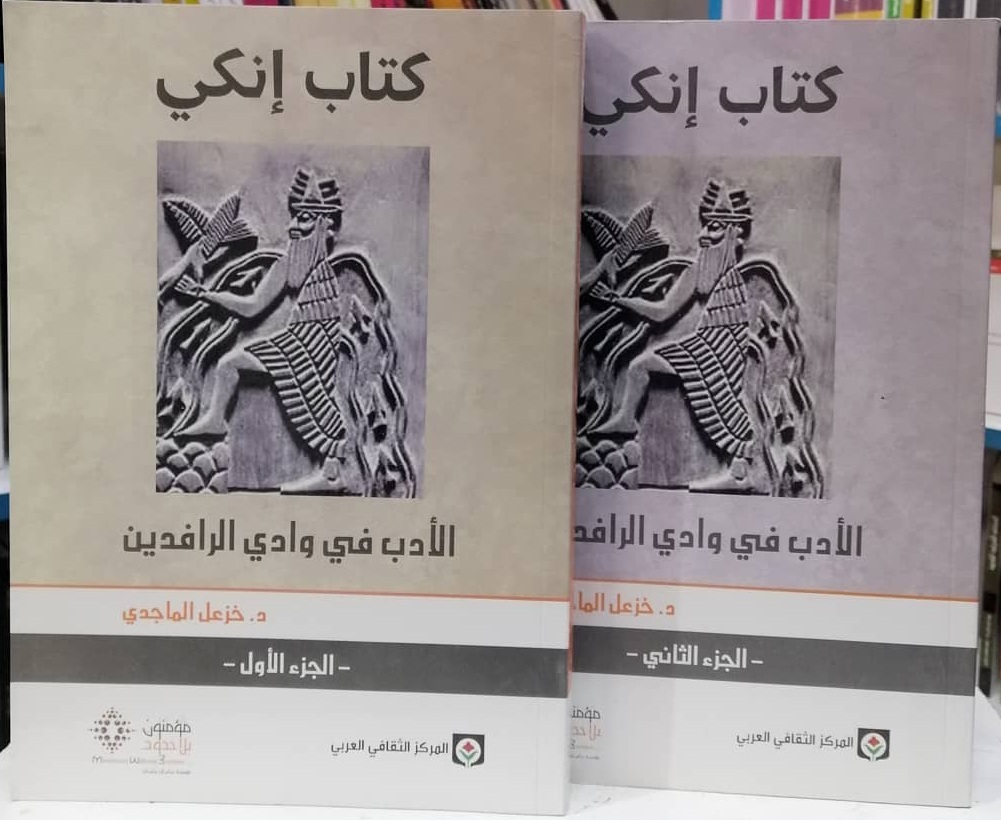
Description
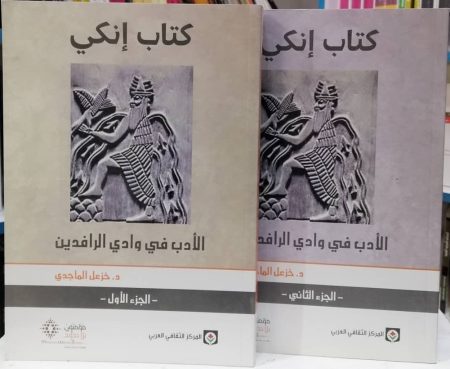
This book places us within a rare literary zodiac of Mesopotamia, encompassing the poets, writers, priests, scribes, oracles, sorcerers, prophets, and musicians who revolved around it.
There are twelve literary constellations. Within their censers, clay tablets and ancient manuscripts are gathered, circling the two rivers, perfuming them with texts (Sumerian, Akkadian, Babylonian, Assyrian, Aramaic, Syriac, Mandaean, Manichean, Harranian, Yazidi, Nabataean, and Hiraic).
The author presents us with a rich literary landscape, unlike the superficial and hasty view of ancient Iraqi literature. He gathers the fragments of a scene that was on the verge of being reduced and then vanished. But the gentle hand of Enki, which the author employed in collecting and writing the legacy of Enki (the master of writing and creativity in literature and the arts), enabled him to give us this abundant flow. This book will remain, for a long time to come, a fundamental reference in the literature of the ancient world, tracing the fragments of the spirit and body in their nascent stages as they give rise to the features, religions, poems, songs, hymns, chants, and elegies that deserve to be called the Book of Enki.
In this first part, the author establishes a new genre for the literature of Mesopotamia, then addresses drama, myths, and the arts of prehistoric times. He then delves deeply into the genres of Sumerian, Akkadian, Babylonian, Assyrian, and Aramaic literature, and the various forms that constituted a distinctive tapestry of clay tablet literature from the beginning of historical times until approximately the end of the sixth century BC.
During this period, the Mesopotamian character was established, with its five main social strata, around which a vast cultural sphere was built. This sphere formed the solid foundation for the next stage, characterized by Gnostic and monotheistic literature, which will be explored in the second part of the Book of Enki…



Reviews
There are no reviews yet.