
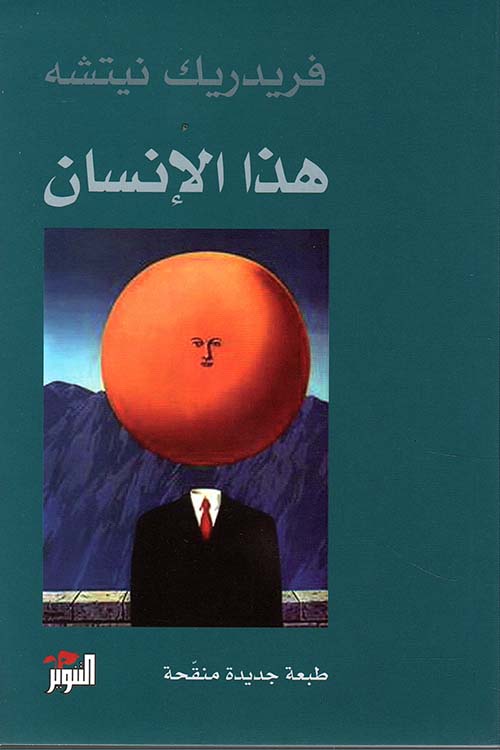
Description
Nietzsche himself defined his life’s mission when he explained it in this book, saying: “My life’s mission is to prepare for humanity a moment of sublime self-awareness, a great zenith of noon that serves it both backward and forward, when, from the tyranny of the accidental and from the priesthood, cause and place are first articulated in relation to humanity as a whole.” Through this message, Nietzsche sheds light on his life’s journey, his writings, and even his writing style, so that he is not misunderstood in the way he predicted and as actually happened to him. This book was not written with ink; rather, he intended his words—as he intended all his words in all his books—to be granite, aiming to revolutionize the reader’s psyche and even to seize them by the throat so that they might participate in that very revolution.
Nietzsche himself clarified the importance of ethical questions because, as he said, these questions determine the future of humanity. But he does not stop at ethics; he wants to transcend them to examine existence itself, concrete, concrete existence, not abstract, absolute existence, so that human existence may change for the better and humanity may emerge from the stage of worms to the stage of true human beings. The higher realm, heralded by lightning, bears new values—noble moral values, values that transform humanity by eliminating alienation and isolation, and the destructive values of servitude. At that moment, humanity is reborn. This confirms Nietzsche’s belonging to existentialist philosophy, which aims for humanity to exercise its freedom and redraw its image on the face of time.
This is Friedrich Nietzsche (1844-1900), the German philosopher born among Germans he believed had become mired in idealism, distancing themselves from life. He saw himself and genuine people as condemned by the unsuitable, the foolish, the deceitful, and the vengeful, who distort the world and stab humanity in the back. Thus, he is a fighter against outdated values, heralding a new era of joy, one that will make every moment of life a celebration, a festival of joy. He calls for a new paradise, yet he himself observes, “My paradise already exists” (in the shadow of my sword). He says of himself, “I am not a daydreamer, and I can find joy in drawing my sword, and perhaps I also have a strong grip.” Nietzsche was a warrior, and so when he philosophized, he wielded a hammer to demolish the old order, from whose darkness light would spring forth, calling for a new Dionysus.
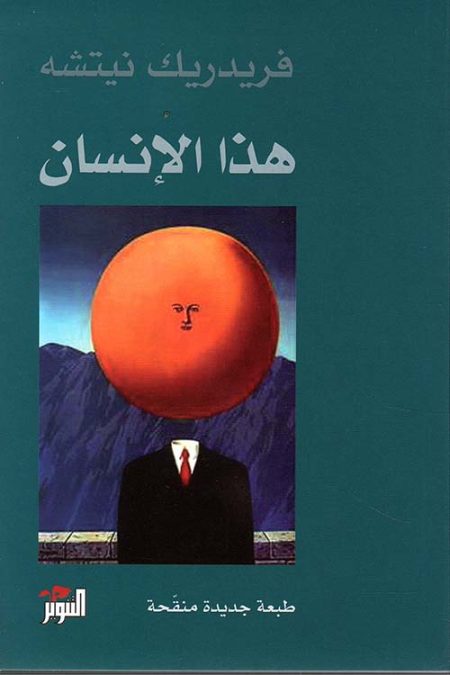
This present book, *Ecce Homo* (This Man), was written by Nietzsche in 1888 when he was experiencing mental turmoil, but it was not published until after his death in 1908. As one scholar says, the book cannot be fully understood unless we grasp its spirit of irony and sarcasm. He criticizes his era and attacks his fellow Germans for their divisive tendencies, which he believes have alienated him due to their idealism. The book is fragmented, and this is not solely due to Nietzsche’s moments of madness, but also to his deliberate, distinctive style. He writes like a bird in flight, catching glimpses and expressing them—a style akin to the thunderclap of a storm.
But it wasn’t an empty, superficial style; he wanted to express human alienation and the attempt to overcome it. He says, “I become aware of a herd of cattle approaching before I can see the herd with my own eyes.” He had already sensed the suffocation of the individual and the loss of freedom, and for this reason, Nietzsche decided, as he put it, “to build myself a mountain range of the most sacred mountains.” With this feeling, Nietzsche recounts in this book his history, his formative years, the history of his writings, and his relationships with intellectuals, expressing all of this as a transparent soul where, as he puts it, eloquence becomes music, the phrase trembles with emotion, and flashes of lightning shine over a future no one has ever dreamed of.



Reviews
There are no reviews yet.