962-7983-18423+
24/7 دعم

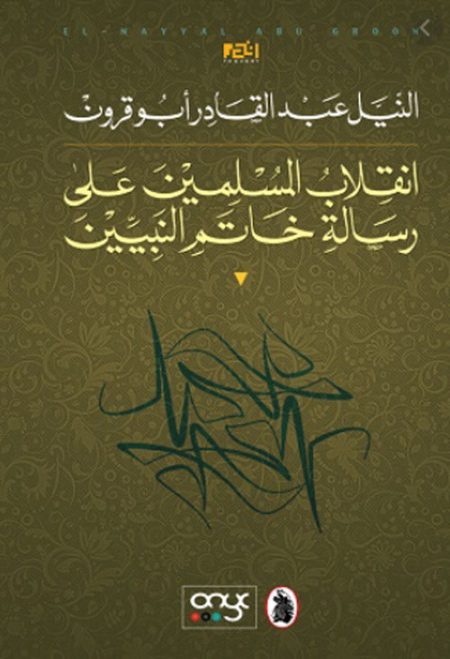
Al-Nayyal Abd al-Qadir Abu Qurun is a Sudanese writer, Islamic jurist, and politician.
He grew up in one of Sudan’s most prominent religious families, receiving an education that combined the study of the Quran and Sufism with formal academic schooling. He is a graduate of the Faculty of Law at the University of Khartoum. He was among the first to initiate a critical re-examination of religious thought, engaging in intense intellectual battles against obscurantist movements—a stance for which he endured significant hardship. In his work, he proposed the concept of “prophetic infallibility” (*isma*) as a foundational framework for reading and understanding the Quran. He also advocated for adopting the ethics of the Prophet Muhammad—in terms of guidance, conduct, and as a model for emulation—and emphasized engaging with those who hold different views by focusing on shared values and common human principles.
Sheikh Al-Nayyal Abd al-Qadir Abu Qurun was born around 1947 in the village of “Sheikh Abu Qurun”—a settlement established by his grandfather, Sheikh Muhammad Abu Qurun, and centered on the study of the Quran and the guidance of the Prophet. Located in the East Nile region, east of the Sudanese capital, Khartoum, this village became a major center for Sufism and a prominent seat of the Qadiriyya order in Sudan. Al-Nayyal was raised in this spiritual environment, studying the Quran at his grandfather’s *khalwa* (traditional Quranic school) before pursuing a formal education.
He graduated from the Faculty of Law at the University of Khartoum. During his studies, his research paper on the poet Abdullah Wad Shurani won first prize in the second edition of the Salmabi Award—a competition organized by the University of Khartoum—and was subsequently published as a book by the University of Khartoum Press.