962-7983-18423+
24/7 دعم
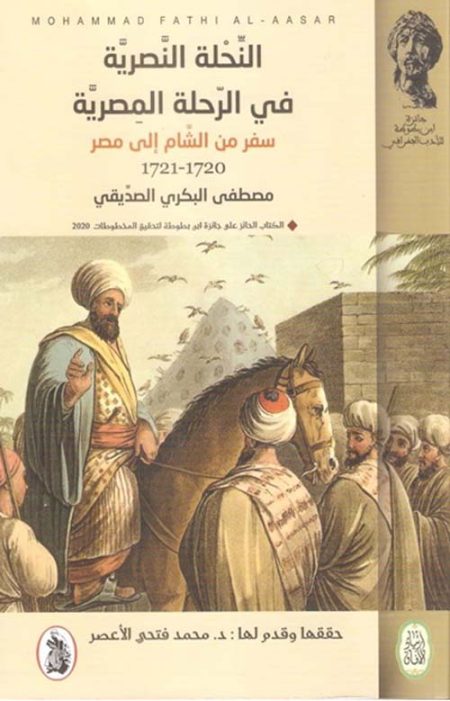
Mustafa ibn Kamal al-Din al-Bakri al-Siddiqi (1099–1162 AH / 1688–1749 AD) was a Hanafi jurist and Sufi who integrated both the Khalwati and Qadiri Sufi orders. In addition to his expertise in jurisprudence and Sufism, he was a man of letters, a poet, and a traveler. The “Bakriyya Khalwatiyya”—a branch of the Suhrawardiyya order—is attributed to him; he is considered one of the most prominent figures who revitalized the Khalwati order in the Middle East, particularly in Egypt, during the mid-12th century AH. The *sanad* (spiritual lineage) of the comprehensive Khalwati order traces back to him. The name “al-Bakri” refers to his lineage, which connects to Abu Bakr al-Siddiq. Hailing from a wealthy family in the Levant, he was born in Damascus in 1688 AD (1099 AH). He studied the religious sciences under various *shaykhs* before turning toward asceticism, devotion, and Sufism. At the age of 16, he received the Khalwati path from Shaykh Abd al-Latif al-Halabi, and by the age of 20, his *shaykh* had authorized him to initiate others and appoint successors. Following this, he began traveling in pursuit of religious knowledge—a practice known in the Sufi tradition as *siyahah* (wandering the earth). He visited dozens of cities and regions, playing a key role in spreading the Khalwati order throughout Palestine (especially Jerusalem), Lebanon, Egypt, Turkey, Iraq, and the Hejaz. Through his followers and students, he also indirectly contributed to its dissemination across the Maghreb. He eventually settled in Egypt, residing near the Al-Azhar Mosque, and passed away in Cairo in 1749 AD (1162 AH).