
Description
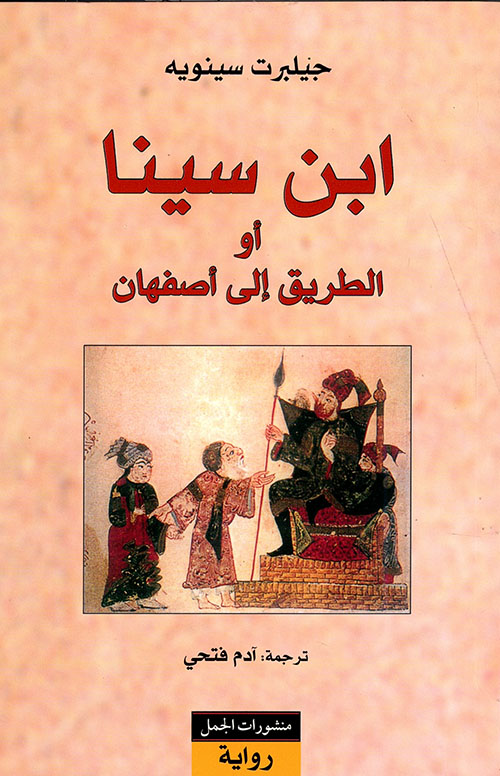
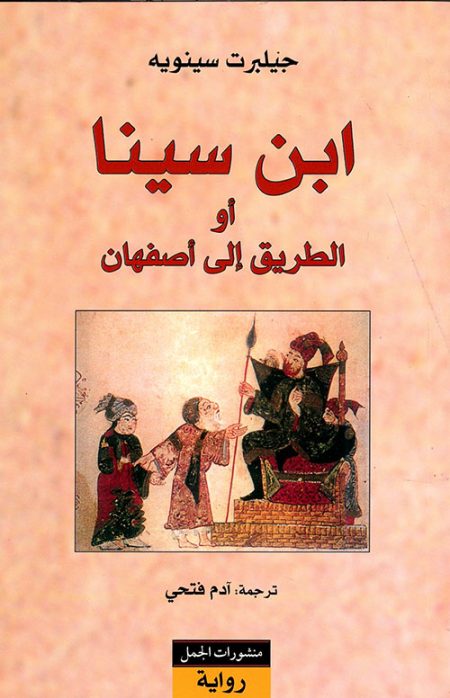
Ibn Sina is one of the few geniuses of bygone eras whose most important works have survived, along with a clear picture of his personal life, thanks to the writings of his student and follower, Abu Ubayd al-Juzjani, who accompanied him on his travels. In nearly twenty pages, al-Juzjani describes the injustices suffered by his teacher at the hands of kings and princes, and the physical toil he endured in pursuit of his lofty goals. Through al-Juzjani’s biography, Ibn Sina appears as a tragic figure ripe for adaptation into a novel, complete with details, twists, suspense, and an ending where fate clashes with will, in accordance with the conventions of Greek tragedy.
Gilbert Sinoué exploited this brief biography to create his monumental work, attributing the narrative to Abu Ubayd al-Juzjani. He included several footnotes, each signed by this loyal companion of Ibn Sina for twenty-five years, and further footnotes signed “The Translator.” This was done to reinforce the illusion that the text originated from Ibn Sina’s student and renowned biographer, and to further convince the reader that the (French) author was merely a translator of Ibn Sina’s biography as written by al-Juzjani. This also implies that he was simply a faithful transmitter of a text originally written in Arabic.
Since this was central to the narrative “game” employed in this work, we decided to adhere to its rules during the translation, signing our footnotes “The Translator,” as if we were not translating a text, but rather restoring it to its original language. This required us to return to the text of Abu Ubayd’s epistle and to consult the works of Ibn Sina himself, particularly *The Canon of Medicine*, *The Book of Healing*, and *The Medical Poem*. We also had to incorporate numerous Quranic verses, prophetic traditions, proverbs, and lines of poetry to approximate, as closely as possible, an “original text”—one that is closer to a hypothetical reality than anything else.
Thus, the reader finds themselves confronted with two games: the game of writing as a translation, and the game of translation as a return of the text to its original source. This was the primary reason that enticed us to translate this novel.
Gilbert Sinoué assigns Abu Ubayd al-Juzjani a dual, or rather, two complementary roles in the narrative: the role of the “explicit narrator,” relying on the first-person pronoun to describe events from the character’s perspective, and the role of the “implicit narrator,” who assumes the author’s role and feigns “neutrality.”

Reviews
There are no reviews yet.