
Description
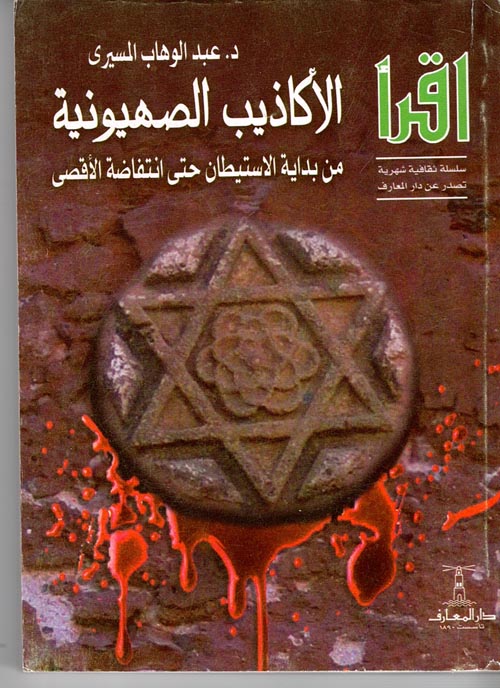
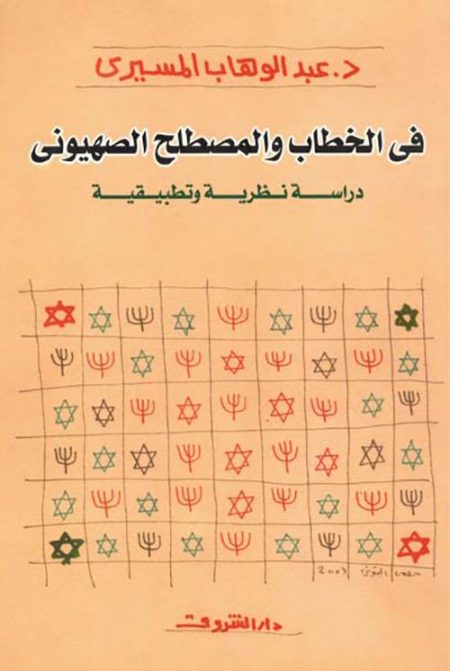
This collection of studies examines and deconstructs certain concepts and terms associated with Judaism and Zionism. The aim is to understand the Zionist enemy, recognize its strengths and weaknesses, and thus anticipate its behavior and effectively confront it.
Chapters one and two address the concepts of “the Jewish people” and “Jewish particularity,” demonstrating their lack of basis in reality. They also explore the difficulty of asserting a “Jewish history” and “Jewish identity,” arguing that Jews have never possessed a completely independent history or even a distinct identity. Rather, they have interacted with the societies in which they have lived since ancient times, influencing and being influenced by them, just like other minorities and majorities within those societies.
Chapters three and four examine the demographic dimension and the Zionists’ use of statistics to promote their narrative. They also explore the ethnic, racial, and religious divisions within Jewish communities and highlight marginalized Jewish groups, such as the Black Hebrews, who are not recognized by Israel or its rabbinical institutions. Chapters Five and Six addressed the concept of “Christian Zionism” and antisemitism, deconstructing three incidents that Zionists often cite in their writings to impose a Zionist interpretation after stripping them of their historical, social, and human context. These incidents were presented in their original contexts: the “Blood Accusation” (where Jews were accused of murdering a Christian boy at Easter in mockery of the crucifixion of Christ), the Dreyfus Affair, and the Leofranc Incident.
The final three chapters examined the features and elements of the Zionist crisis, its weaknesses and strengths, the Zionist perspective on Arabs and their complete exclusion from the center of events, and the blessed intifada and its potential to change reality. This book attempts to deconstruct and reconstruct some fundamental Zionist concepts and terms, such as “the Jewish people,” “Jewish exceptionalism,” and “Christian Zionism,” in order to deepen our understanding of the Zionist enemy, to recognize its strengths and weaknesses, and thus improve our ability to predict its behavior and confront it. The book also addresses an important aspect of Jewish and Zionist phenomena that has not been sufficiently addressed: the demographic dimension, and how Zionists use statistics to promote their ideology. Furthermore, the book analyzes the crisis of Zionism on both theoretical and practical levels.




Reviews
There are no reviews yet.