
Description
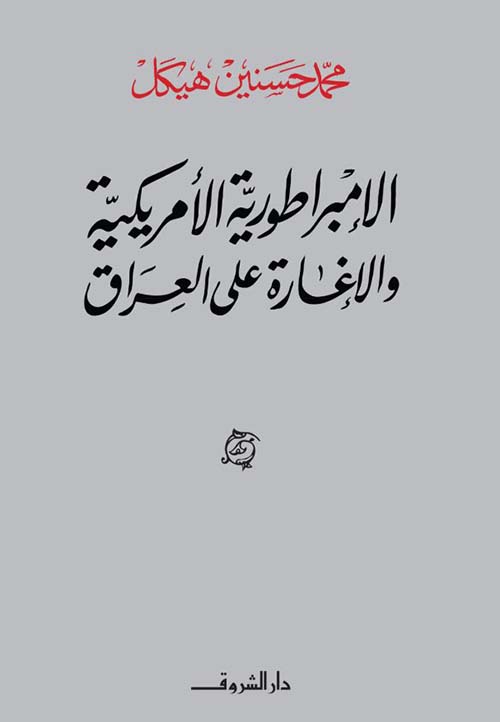
The world stands bewildered by the course of the invasion of Iraq, from its initial stages to its still-unfolding end, despite the invaders’ promises of a swift conclusion. From its very first signs, politicians and even ordinary citizens alike realized that the United States, following its invasion of Afghanistan, was on the path to building an empire. Thus, events in Iraq unfolded rapidly, leaving the world adrift. American pronouncements have their own dimensions and underlying motives for violating Iraq’s sovereignty and its people. What lies behind these crises? What is the true motive for the invasion of Iraq?
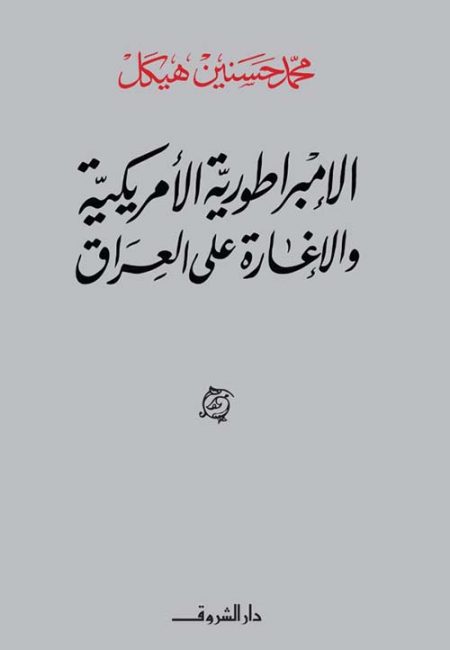
This is what Mohamed Hassanein Heikal attempts to uncover in his book, which, given his deep expertise in political analysis and his position at the heart of political events, particularly in American and global thought, provides a clear and unambiguous answer. Heikal poses a question that resonates with us all: What comes next? He revisits, in an attempt to find an answer, the global political climate that accompanied the American decision to invade Iraq. He says that during the first half of March 2001, the “American Imperial Group” became increasingly concerned that there was a shift in world opinion that was increasing opposition to the invasion of Iraq. A public opinion poll (conducted on February 29 and broadcast in full on March 1, by The Washington Post in conjunction with ABC, the largest American television network) showed that 56% of the American public favored giving UN inspectors in Iraq an open-ended opportunity to complete their mission—while only 39% supported President Bush launching an attack on Iraq without delay. Meanwhile, public opinion polls in Britain revealed that 52% of those surveyed in a poll of 5,000 British men and women (conducted by Harris) opposed invading Iraq under any circumstances. Even in Australia, polls showed that 64% of the public required UN approval through an unanimous Security Council resolution for entering the war. The empire in Washington grew increasingly nervous as the train of war moved along the tracks, slowly waiting to increase speed, not to apply the brakes. The pause.
Heikal continues, saying that in the meantime, a significant scene unfolded in President Bush’s office at the White House. The scheduled start of the invasion of Iraq was dusk on March 20, 2003. Nevertheless, President Bush signed an executive order to kill Saddam Hussein in a preemptive strike, even if it meant moving the zero hour forward. This was based on information he was told came from a source who was closely monitoring Saddam Hussein’s movements inside Baghdad. As he signed the preemptive killing order, President Bush remarked, “One missile that kills this man now will save us an entire war!” He then reassured himself, “Isn’t it true that reassuring an entire army is worth killing one man?” The remark was telling. Within hours, Tenet was urgently calling the White House; they now knew exactly where Saddam Hussein was. George Bush gave his approval, and the opening strike of the war began twenty-four hours ahead of schedule, with the hope that… Saddam Hussein was killed with the wisdom that “killing one man reassures an entire army.”






Reviews
There are no reviews yet.