
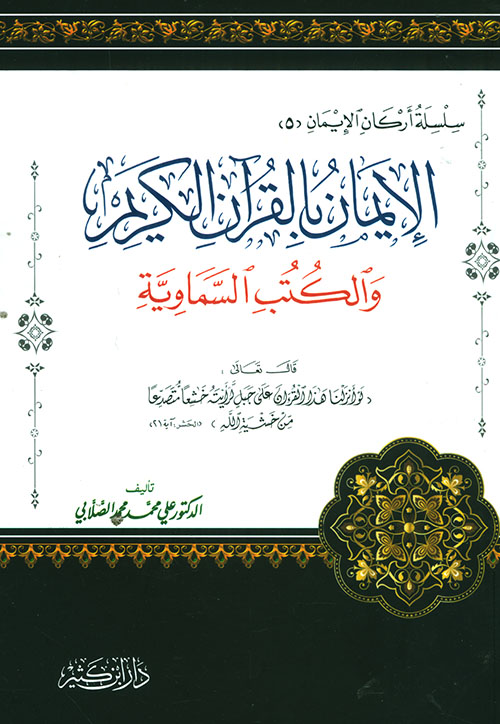
Description
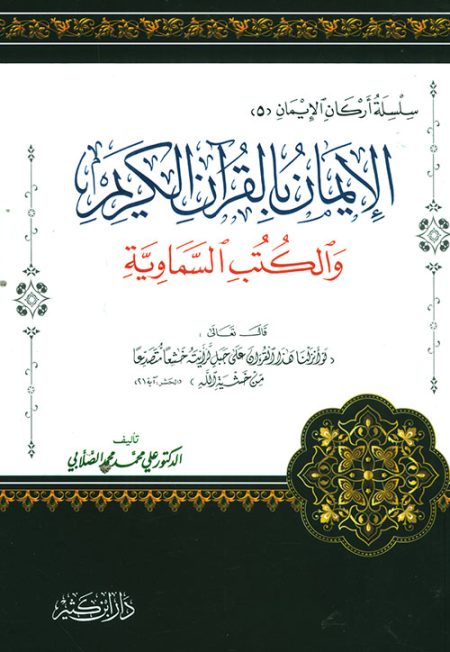
This book addresses the subject of belief in the Holy Quran and the Divine Scriptures and is part of a series on the “Pillars of Faith.” The author has organized the work into several sections. The first section explores the Holy Quran, defining it both linguistically and terminologically. The second section discusses the magnificence of the Quran, as well as its various names and attributes. Among its names are *al-Furqan* (the Criterion), *al-Burhan* (the Proof), *al-Haqq* (the Truth), *al-Naba’ al-‘Azim* (the Great News), *al-Balagh* (the Proclamation), *al-Ruh* (the Spirit), *al-Maw‘izah* (the Admonition), *al-Shifa’* (the Healing), and *Ahsan al-Hadith* (the Best Discourse). The Almighty has also ascribed numerous attributes to the Quran, including *al-Hakim* (the Wise), *al-‘Aziz* (the Mighty), *al-Karim* (the Noble), *al-Majid* (the Glorious), *al-‘Azim* (the Magnificent), *al-Bashir* (the Bearer of Glad Tidings), and *al-Nadhir* (the Warner).
The third section highlights the unique characteristics of the Holy Quran. Most notably, it is a divine, preserved, and miraculous book; it is clear, accessible, and serves as a guide for all of humanity across all eras. It was revealed in the most refined and comprehensive of languages, and it stands as a guardian (*muhaymin*) over all the Divine Scriptures that preceded it. In the fourth section, the text discusses the objectives (*maqasid*) of the Holy Quran. Key among these are: correcting beliefs and perceptions; purifying the human soul; worshipping God and attaining piety (*taqwa*); establishing justice among people; promoting consultation (*shura*) and freedom; removing hardship; affirming human dignity through ethics and virtues; and establishing human rights—such as the right to life, liberty, equality, and justice. These also include the right to a fair trial, protection against the abuse of authority, the safeguarding of one’s honor and reputation, the right to asylum, the rights of minorities, the right to participate in public life, the right to propagate the faith (*da’wah*), economic rights, property rights, the rights of workers, the right to the basic necessities of life, and the protection of the rights of the vulnerable. Furthermore, the objectives of the Quran encompass the formation of a righteous family, the granting of justice to women—liberating them from the injustices of the pre-Islamic era (*jahiliyyah*)—the building of a nation that serves as a witness (*ummah shahidah*) to all mankind, the promotion of tolerance and mercy, and the fulfillment of covenants and contracts.
The fifth section addresses the compilation and transcription of the Holy Quran, detailing the stages this civilizational endeavor underwent—from the time of the Prophet (peace be upon him) through the era of Uthman ibn Affan (may God be pleased with him). The sixth section focuses on previous divine scriptures—such as the Scrolls of Abraham, the Torah, the Gospel, and the Psalms—emphasizing the obligation to believe in them, the significance of such belief, the distortions they subsequently underwent, and the role of the Holy Quran in superseding the scriptures that preceded it.
Reviews
There are no reviews yet.