
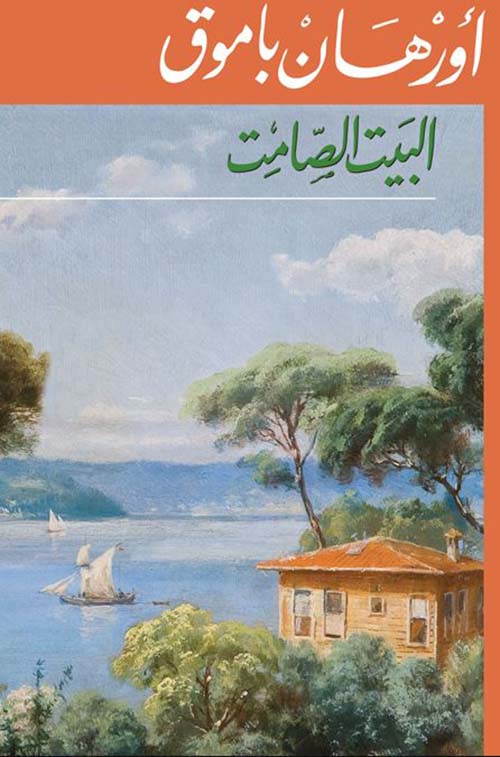
Description
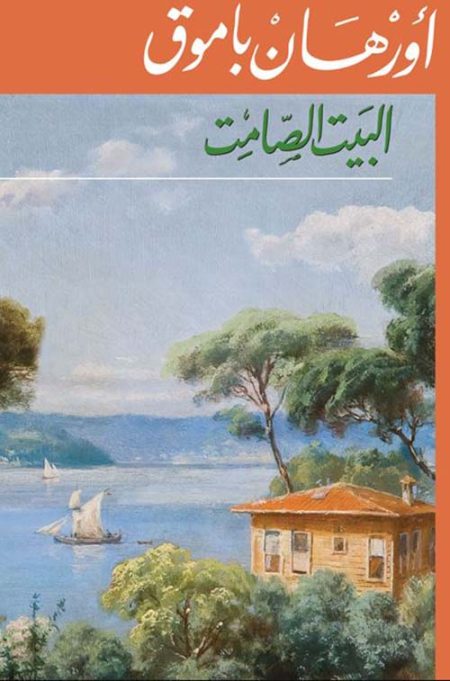
Pamuk chooses a house located in the Cinnahisar district on the outskirts of Istanbul, where the elderly Fatma, widow of Selahattin Oglu, lives with her servant, Recep, a dwarf who is actually her stepson from an illegitimate relationship. Life in this house proceeds quietly and routinely after the departure of her husband and son, Dogan. However, Pamuk chooses the time of the grandchildren’s visit to their grandmother Fatma to tell the story. With the arrival of the three grandchildren—Faruk, Metin, and Nilfen—the house is no longer silent but becomes noisy and vibrant. The novel concludes with the end of this brief visit.
The novel, written in the early 1980s, delves into the details of everyday life, with its sorrows, joys, disappointments, and hopes. However, the characters Pamuk portrays, with a touch of subtlety and a great deal of realism, share a panoramic view of contemporary Turkey, a country teeming with turmoil and experiencing political upheavals manifested in numerous military coups during the last three decades of the 20th century. The novelist also illuminates the country’s history through the character of Faruk, the older brother, who is deeply interested in history and delves into his country’s past to understand current events, attempting to connect what happened in the past with what is happening today. Meanwhile, Metin looks towards the future, modernity, and a life of luxury and extravagance, desiring to emigrate to the United States and settle there, fleeing from this country, as “one cannot become anything in this drugged East.” Nilfun, on the other hand, sympathizes with the communists and dreams of establishing justice and social equality. However, the rising extremist nationalist movement in Turkey at that time threatens and fights the communists, and perhaps the actions of Hasan (the son of Ismail, brother of Pamuk) are a testament to this. The act of Rajab, who belonged to this movement, brutally beating Nilfon, resulting in her death, reveals the deep-seated animosity between the communists and the nationalists.
The novel’s characters contribute to shaping this work, each assuming the role of narrator in separate chapters. Thus, we read Rajab’s account in the first person, as well as that of his nephew Hassan, who doesn’t conceal the arrogant Turkish sentiment stemming from the Ottoman imperial legacy. He asks: “How did we become pawns in the hands of the great powers, the communists, the Maoists, and the imperialists… How did we become forced to extend our hand to peoples who were once our servants?” The most poignant voice, however, is that of the elderly grandmother, addressing herself and the ghost of her absent husband. Her weary memory drifts back to distant years, recalling memories of her late husband, Salah al-Din, and speaking of his “extremist” ideas and beliefs—his belief in Darwin’s theory of evolution and his strong inclination towards Western culture, which clashed with her traditional views. The picture is completed by the narration of the two grandsons, Faruk and Metin. Strangely, the author doesn’t allow the granddaughter, Nilfon, to narrate, despite her prominent presence in the novel.
It’s difficult to find anything out of the ordinary in “The Silent House.” Life unfolds in its usual, monotonous way. Perhaps Pamuk’s strength in this novel lies in his ability to capture this ordinary scene and weave it into a narrative. Pamuk believes that everything in this world deserves to be recorded. He says, “How right Mallarmé was when he said that ‘everything in the world exists to be put in a book,’ and the best-equipped book to absorb everything in the world is, without a doubt, the novel.” Farouk, one of the novel’s protagonists, expresses his admiration for his favorite author, saying, “Perhaps he sees the trees, the birds, the houses, and the walls as I do, but he deceives me only with his writing skill.” And perhaps this is precisely what Pamuk does; he deceives the reader with his writing skill, crafting the ordinary into language that elevates it to a level worthy of being bound between the covers of a book.
Reviews
There are no reviews yet.