
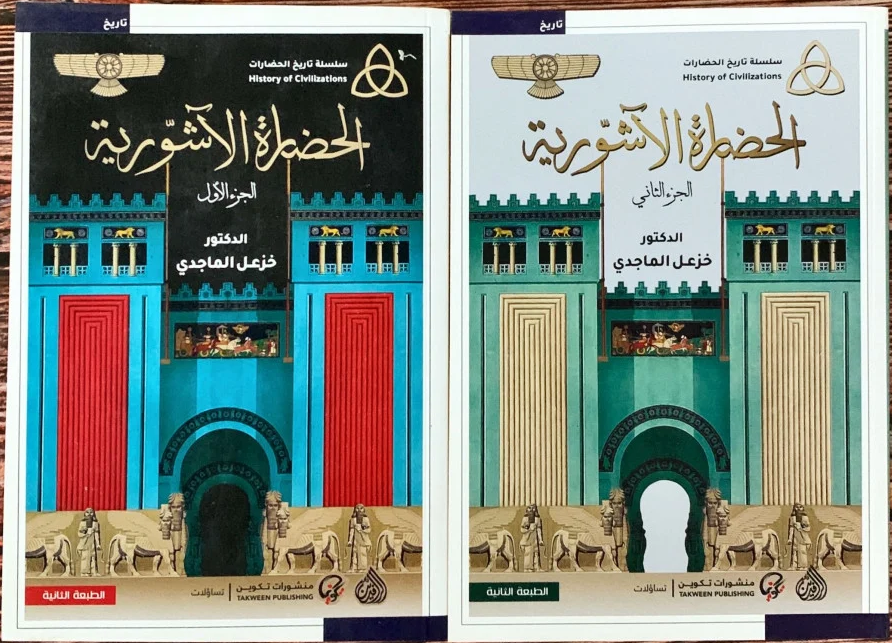
Description
The Assyrian civilization is one of the greatest civilizations of ancient history, and we might even say it is the greatest when discussing an imperial civilization. However, under the guise of its vast expansion and excessive brutality, it became the target of criticism and destruction, its image distorted. Then, it suffered neglect and marginalization after being destroyed by dubious alliances. This neglect and oblivion, both past and present, was deliberate, an attempt to diminish its achievements and the grandeur that once surpassed all others.
The book argues that this civilization was subjected to a heinous regional conspiracy that brought it down, buried it, and killed, displaced, imprisoned, and exiled its people. Its cities were buried under the earth, and its cultural achievements were looted and given to the states and peoples who conspired against it at the time. This conspiracy exploited the widespread negative propaganda against the might and tyranny of the Assyrian Empire to conceal the crimes of genocide and plunder it perpetrated against it. When Harry Saggs described Assyrian civilization as “greatness at its zenith,” he was clearly referring to a magnificent pinnacle of the civilizations of Mesopotamia, the ancient Near East, and indeed the entire ancient world. It was a civilization that embodied the essence of its era, which spanned nearly two thousand continuous years. Yet, in the last three centuries of its history (the Neo-Assyrian period), it soared to great heights, soaring above other lands and civilizations. For the first time in the history of empires, it established a unique and highly effective administrative model, which was subsequently imitated by all empires.
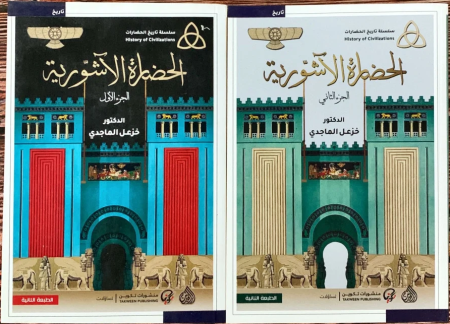
The first part of the book, “Assyrian Civilization,” comprises ten chapters, beginning with an introductory chapter on Assyria and the science and scholars of Assyriology. The remaining chapters address the elements of Assyrian civilization: geographical, historical, political, legal, military, civil, economic, linguistic, literary, intellectual, and social aspects. The second part completes the exploration of these elements of Assyrian civilization.









Reviews
There are no reviews yet.