
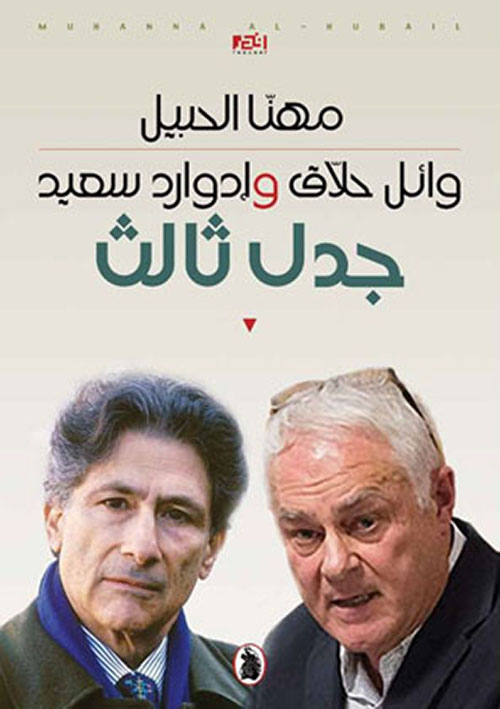
Description
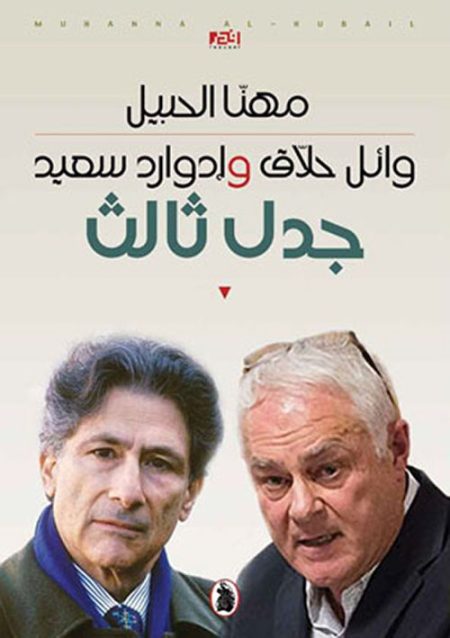
The author examines Wael Hallaq’s critical ideas, tracing them back to the shortcomings of Orientalism. He notes that both Said and Hallaq agree on how the imperial power of Western cultural hegemony has stifled the contemporary mind and constrained Eastern philosophy. He acknowledges Said’s foundational work in deconstructing Orientalism, while also recognizing Hallaq’s distinct intellectual contribution—expanding the scope of critique toward modernity and engaging deeply with the Islamic intellectual tradition, which sets his approach apart in a qualitative sense.
Al-Hubayl points out that the book presents Hallaq’s critical vision not merely as a response or a critique of Edward Said, but as a unique body of work and a profound discourse. This discourse critiques the premises of a philosophy constrained by modernity—or one developed within the rigid frameworks established by it. He suggests that Hallaq’s philosophical writings convey an ethical message to the modern world: to break the wall of silence surrounding the true sources of knowledge—knowledge as it emerged with humanity, as evidenced in nature, throughout the historical journey of the Earth, and within the verified scope of human experience—which, he argues, should be the primary duty of modern scholarship.
Muhanna Al-Hubayl is an Islamic writer and Saudi-Arabian researcher currently living abroad. He studied traditional Islamic sciences—specifically Maliki jurisprudence—and the Arabic language. Well-versed in the Islamic intellectual tradition, he has been significantly influenced by the perspectives of this school of thought.
Reviews
There are no reviews yet.