
Description
In his novels, the Peruvian novelist Mario Vargas Llosa sought to embrace Latin America with its illusions, its aborted dreams, and its myths crushed under the boots of tyrants and dictators.
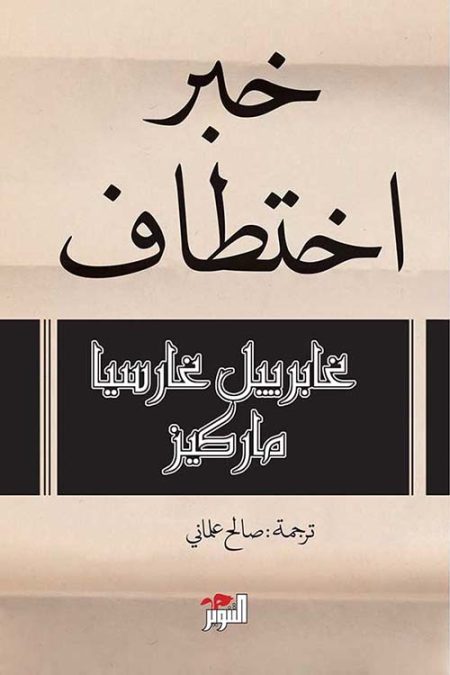
The French magazine Le Nouvel d’Adaptre noted that, after twenty-eight years, Vargas Llosa joined his arch-rival, the Colombian writer Gabriel García Márquez, and twenty years later, the Mexican writer Octavius Paz—two giants of Latin American literature. Like them, he is a novelist whose works serve as a radiant mirror reflecting a continent that has long witnessed ruptures, explosions, and paradoxes. An orphan of impossible revolutions, a giant of writing, a tireless worker, whom critics compare to Victor Hugo, Vargas Llosa never abandoned his commitment. He initially sided with Fidel Castro’s government, then gradually shifted towards the liberal right. Since then, he has waged a fierce campaign in the press against progressive governments in Latin America.
Vargas Llosa was born in March 1936. He studied at the University of Lima and worked as a proofreader, literary critic, and film critic. He was active in the Communist Youth before breaking away due to its Stalinist leanings. He then traveled to Spain, where he completed his doctoral dissertation in Madrid before moving to Paris in the late 1950s.
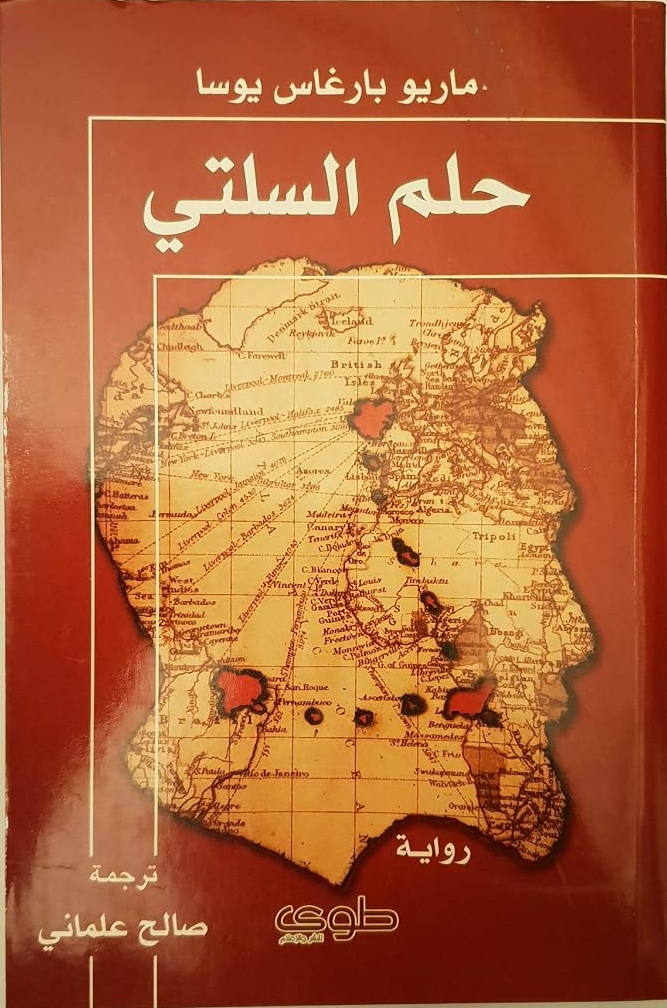
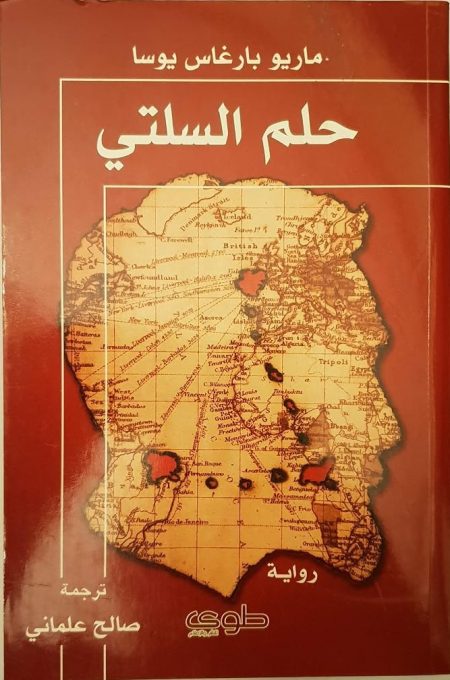
With forty doctorates, Vargas Llosa continues to work tirelessly. In 2011, he published his novel *The Dream of the Seleucid*, a fictionalized biography of an Irish revolutionary, arms dealer, and British diplomat who exposed the horrors of colonialism in Africa and Peru.
It is clear from his works that Vargas Llosa is one of the most prominent figures in world literature, whose fame was widespread even before he received the Nobel Prize in Literature in 2010. The central theme of “The Celtic Dream” revolves around denouncing and exposing the exploitation of man by man in the Congo forests, which were the private property of King Leopold II of Belgium, and in the Peruvian Amazon, a source of British exploitation until the beginning of the 20th century.
Through his numerous travels, the Irish adventurer and revolutionary Roger C. Asma (1864–1916), who authored a famous report on Africa bearing his name, reveals the extent of social injustice and the devastating consequences of colonialism that he also witnessed in his homeland. Driven by his dream of a world free from colonialism and colonies—a dream that would later guide his struggle, beginning with the fight against the exploitation of his native Ireland—the novel explores these two themes that would shape the path of this dedicated and principled man. His humanitarian work quickly became a guiding principle, while his political activism led to a tragic death. In this novel, Vargas Llosa breathes life into a captivating, historical figure, bringing him to life in his own time. At the same time, he invites us to reflect on contemporary themes such as nationalism, misogyny, and the horrors of European colonialism in Africa and Latin America.
Commenting on his book, *The Celtic Dream*, Vargas Llosa said: “Literature is an act of rebellion, even if the writer doesn’t intend it. Not necessarily a political rebellion, but an act of rebellion against life and history. If you create worlds, it’s because the world as it is doesn’t satisfy you.
There’s a revolutionary element in imagination; it explores desires and inclinations for things that the real world lacks. When you finish reading a great book, you’re affected by all the flaws and imperfections of the real world. The novel is the source of all critique of the world and society. Otherwise, why would all the tyrannical regimes in history have imposed censorship on literature? Because they fear it. Without the good books I’ve read, my view of the world would have been very limited.” As a citizen, a writer has a responsibility to participate, and journalism helps me a great deal to stay connected to history day by day. Above all, I love literature, but not in the way a writer does in his ivory tower, detached from the rest of the world.
The following are some excerpts about the Congo from the novel *The Celtic Dream*:
When they opened the cell door, the street noise, usually muffled by the stone walls, entered with the burst of light and the gust of wind. Roger woke with a start. Still blinking, confused, and struggling to regain his composure, he glimpsed the ghost of the Sheriff leaning against the empty doorway. His sagging face, with its blond mustache and gossipy eyes, stared at him with a coldness he had never before attempted to conceal. This was a man who would suffer if the English government granted his plea for mercy.
“May I have a shower today?” he asked before the portly jailer poked his head in, looking into his eyes with the same disgust Roger had glimpsed in the lawyer’s assistant. “You can’t have a shower until the day of your execution,” the sheriff said, savoring the words, “if that’s your last wish that day.”
There are others who, instead of asking for a shower, demand a hearty meal. And that’s a bad deal for Mr. Ellis.
Reviews
There are no reviews yet.