
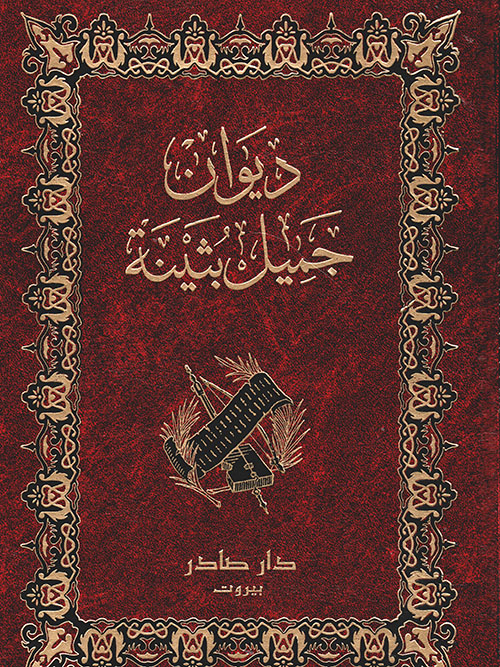
Description
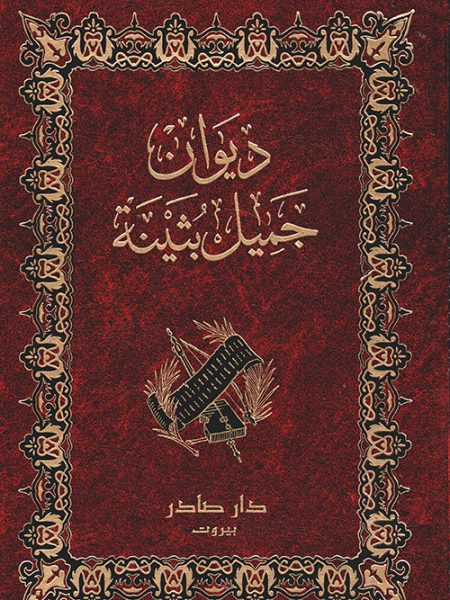
Whenever Jamil ibn Mu’ammar is mentioned, the platonic love for which the poet’s tribe, ‘Udhra, was renowned immediately springs to mind. It was even said that if they loved, they would die, due to their sincerity and devotion, and their chastity and self-restraint when they were with their beloveds, despite the separation and deprivation they endured.
Jamil ibn Abdullah ibn Mu’ammar al-‘Udhri suffered the same fate as other such unfortunate poets. He loved Buthayna bint Hubb ibn Han ibn Rabi’a, from the ‘Udhra tribe. She was his cousin, sharing a common ancestor with him through Han ibn Rabi’a. It is said that he fell in love with her as a young boy, while she was still a child of marriageable age. Thus, his love for her grew, and his heart and poetry were devoted to her. He would sometimes mention her name, and at other times allude to her by another name, until she became famous, and he became known as Jamil Buthayna. This love that Jamil bore for Buthaina was untainted by any other passion, despite the many women from his own tribe who tried to seduce him. His heart was devoted to no one but her, he found no conversation more pleasing than hers, and no smile more sweet than hers. After falling in love with her, he wrote no poetry except about her, and her memory died in his heart and on his tongue. The last poem he composed was sent to her. She inspired in him the beautiful love poetry that ancient poetry had never known, poetry that was more profound in its effect on the soul, more eloquent in its stirring of the heart and arousal of emotion. It did not merely praise the woman’s beauty, but added something spiritual, concerned with the poet’s own self, his feelings, his pains, and his hopes. Perhaps his concern for himself was greater than his concern for describing his beloved, for he scarcely mentioned her before turning to express his complaints and the anguish of separation, deprivation, and estrangement he endured. His longing was sincere, his conscience and speech pure. I have rarely read any of his poetry that would cast doubt on his chastity or that of his beloved, except for a few verses that subtly hint at suspicion. Perhaps the motivation behind these verses stemmed from his reproach of Buthaina should she abandon him or turn to another.





Reviews
There are no reviews yet.