
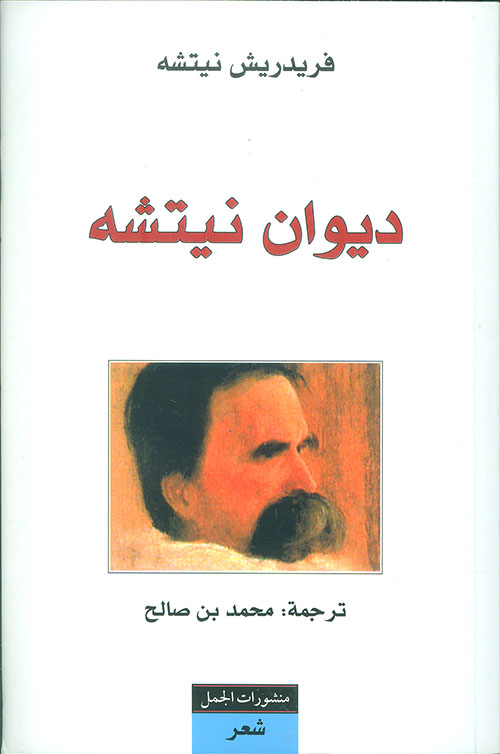
Description
Few thinkers or philosophers, in the West or the East, have left the impact that the German thinker and poet Friedrich Nietzsche did, both in his time and in subsequent eras. Nietzsche, particularly in his famous book “Thus Spoke Zarathustra,” managed to create a veritable earthquake in prevailing concepts and values, the tremors of which continue to resonate deeply with successive generations, not only in Germany but throughout the world.
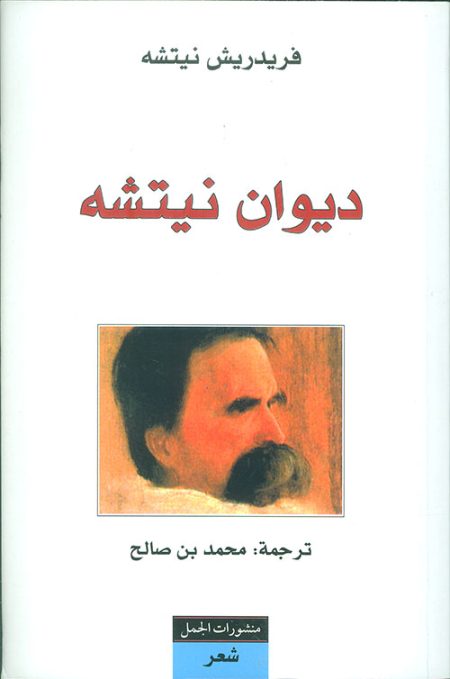
However, Arab readers’ knowledge of Nietzsche is largely limited to the philosophical aspects of his personality, while many know little about his creative contributions to music, theater, and especially poetry. Therefore, the poetry collection published by Dar al-Jamal in Germany, translated into Arabic by the Tunisian poet and writer Muhammad bin Saleh, entitled “Nietzsche’s Collected Poems,” fills a significant gap in this area and introduces us further to the multifaceted nature of this unique figure, with his creativity, experience, and complex formation.
It is not surprising, of course, that Nietzsche immersed himself in poetry from his early adolescence in the mid-19th century until the period that led him to madness several years before his death. His philosophy, based on power, individuality, and self-exaltation, resonates deeply with poetry, making this highly personal art form an additional means of expressing his bold opinions and unbridled ideas. This is especially true given that Nietzsche, at one point, considered existence itself an aesthetic phenomenon, whose meanings and purpose poets and artists strive to reveal.
Muhammad bin Saleh begins the translated poems with a lengthy and rich introduction that sheds considerable light on Nietzsche’s view of language, not merely as a tool for transmission, communication, and creation, but as an instrument of inquiry, discovery, and the struggle to articulate the self and existence. If this concept of language formed the true link between poetry and philosophy for Nietzsche, then his poetic, as well as philosophical, choice did not lean towards the Apollonian, demonstrative reason connected to abstract systems and analyses. Rather, he gravitated towards the tense, reactive Dionysian body as the ideal means of inciting both action and creation.





Reviews
There are no reviews yet.