
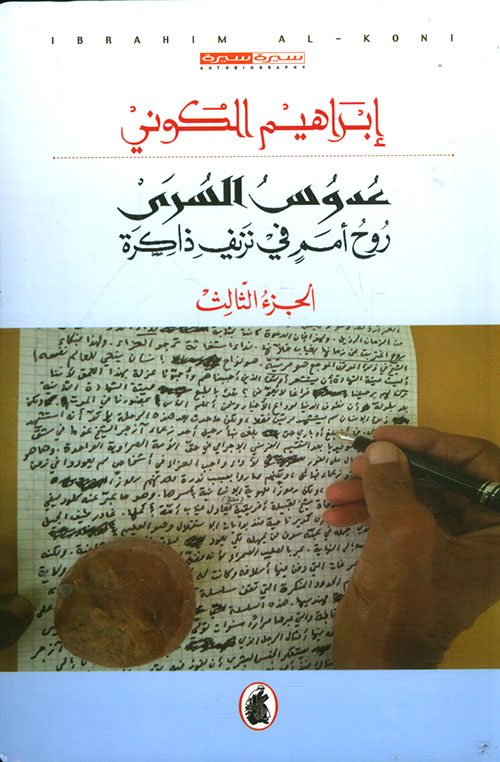
Description
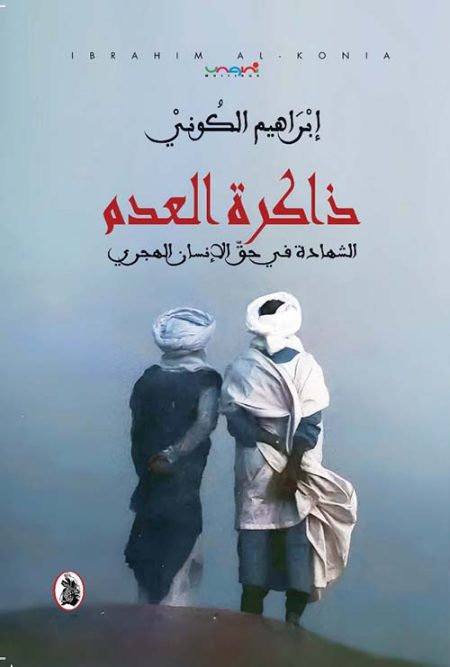
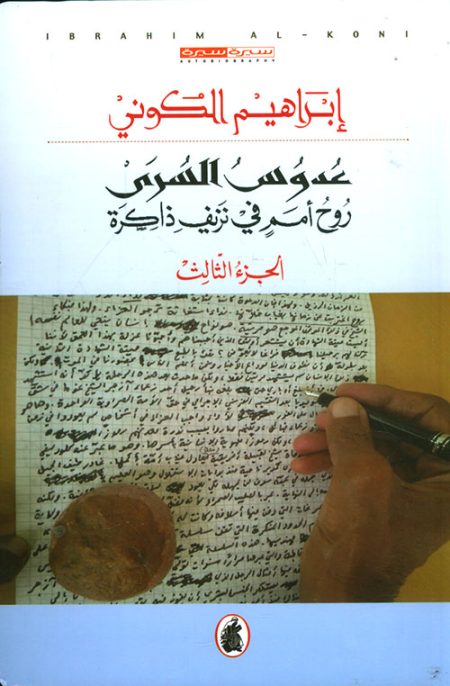
It was March 1986, springtime in the North, a region that doesn’t recognize the calendar spring, for the North, especially in the mountains, has its own calendar. Despite the North’s harshness, the sun finally managed to break the ice’s resistance, and it began to melt days before my departure. But in those early days, nothingness reigned: nothingness in nature and nothingness in the soul. The long northern night was a testament to my heart. Didn’t I need the antidote of doctors whose only concern was to defy a body I’d sent to hell? I yearned for an antidote to heal the soul’s longing for well-being, the soul’s longing for recovery from a disease called the world, the soul’s longing for what has no substitute: freedom! I sought refuge in the harsh, dialectical nature of the North during the day, and I turned to the vastness of my inner self at night.
An inner realm, still elusive in its infancy, beguiles and lures with the art of what memory suggests. The intriguing aspect is not merely that the journey culminates in discovery on a personal level, but that it also crowns itself on an objective level: what spirit does the excavation reveal? It is a spirit of duality, a self-expression rooted in an essence that stands as the core of another spirit playing the role of the object—the desert; that continent so close to the world, yet so free from the world’s secret, through its silence on the talisman of creation. This is the ultimate discovery, awaiting its actual birth in the experience of the “primitive language” with its single consonant, a language that has preoccupied linguists since time immemorial, and whose presence in most of the ancient world’s languages was subsequently deciphered in the “Manifesto on the Language of Theology” (in its seven parts).
As for the “well,” it was, in the course of the long excavations, merely an approach to the rich and fertile field of antiquities, a field of dry, withered caps that would not have aged and been stripped of their original nature had it not been for the land’s pioneering role in aridity… Naturally, the first challenge in the narrative of the desert is how to express a reality alienated from reality… a reality outside of reality… what we are justified in calling: nothingness!…
This nothingness found its home in the desert, an intimate companion… this nothingness for which the desert was an earthly embodiment, a place one could visit on a tourist trip with the guarantee of a safe return!…
The path was another journey… the path did not emerge overnight, but after traversing a farther path in the archaeology of the soul. Had myth not rushed to the aid of the explorer, he would never have succeeded in uttering the word “desert,” for myth can only be given voice in the language of myth, which means accepting the reality of the desert as myth, as a mythical, embodied presence.
The desert is a mystical entity that recognizes no religion other than myth, and the creation of a language beyond reality is a primary necessity in the alphabet of narrative, but what kind of narrative? The narrative must be poetic, not merely dramatic… Here, al-Adous had to discard all the theories he had learned at the Gorky Institute of Literature and eradicate a malignant disease called dogma, in order to lay the foundation for desert literature, or rather, for the desert novel, especially the multi-part epic novel, drawing upon the spirit of the desert infused in a language that soars with a thousand wings, for it alone can interrogate the unknown…
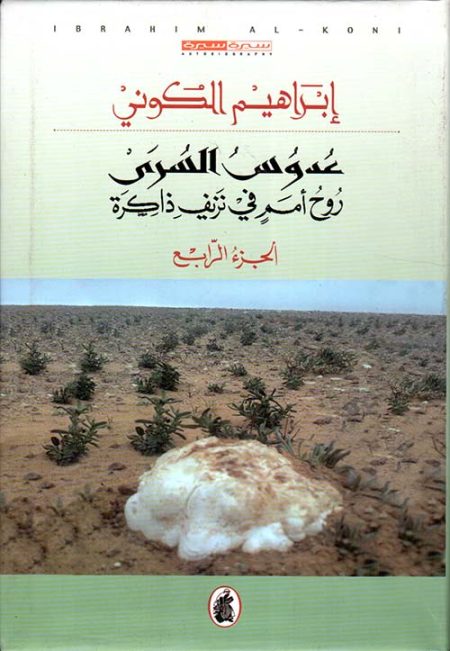
At that time, Ibrahim al-Koni carried the pain of a bleeding body, traversing continents (Europe, Asia, and Africa) in search of an antidote to the economic reality of his alienation from them. This coincided with a period in which the world witnessed the farcical chapters of power, which sacrifices the dregs of humanity only to place the most despicable upon its throne… Al-Koni recounts his journeys to Switzerland… and the story of his creative output, culminating in the secret of Abdous. And if his great desert is not the refuge for the lost soul to spend his remaining breaths in this world, then let this paradise be. Mythology became a refuge for the man who loved it more than any earthly paradise, so much so that he only left it in search of it… And so, more remains in al-Koni’s memory, to be revealed in later parts, the fourth in this autobiography entitled “The Manifesto.”
Reviews
There are no reviews yet.