
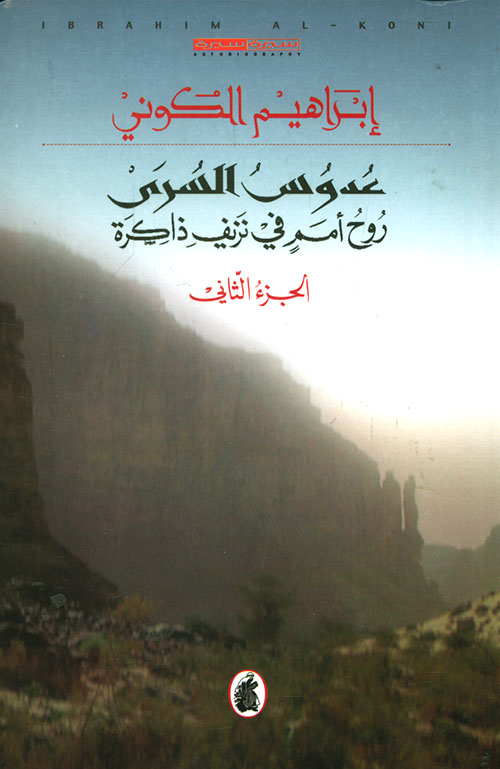
Description
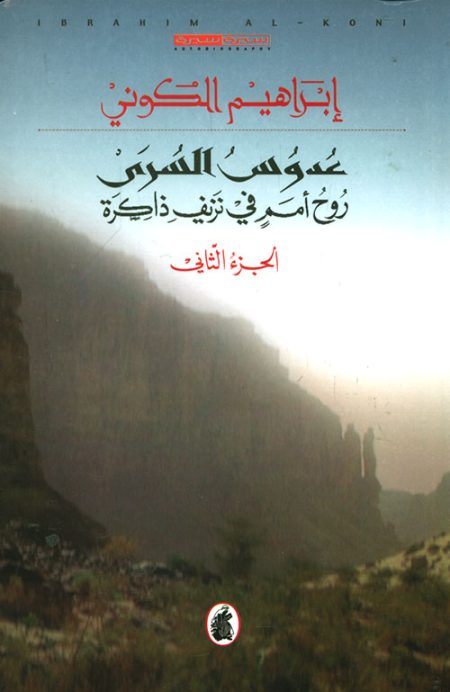
“This transgression prompted Al-Tulayisi to offer yet another piece of counsel—advice that transported me years back in time, echoing a sentiment I had heard from another sage, Ghaib Tu’ma Farman, long before encountering it later in Tolstoy’s brief injunction: ‘Strive to write about what you know.’ Al-Tulayisi reiterated this very point that evening when he praised the story ‘Al-Salah’ (The Prayer) for capturing the spirit of the place—just as Farman had done before him. All these voices of wisdom were beckoning me to look back. This consensus felt like a prophecy I was not yet equipped to fully grasp. Perhaps I failed to comprehend it because I had not yet traversed enough of hell to carve a path of salvation into my soul through the experience of the desert’s presence. It seems, then, no coincidence that this sage was the first to urge me to storm the bastions of the novel—a genre that had been an object of my soul’s adoration and the goddess of my dreams since childhood. Throughout my journey, I had awaited the chance to enter its kingdom, convinced that the day would come—driven by the profound certainty that I would live forever! Yes, indeed! That audacious feeling—that death did not concern me because I was immortal—was the opium of youth, far more potent in shaping our dreams than narcotic drugs. It paralyzes us by feeding a sense of security—a false, sinful security from which one awakens only when it is too late. It seems no earthly power can rouse us from this deathly slumber in the face of destiny—save for calamity. A calamity capable of forcing us to stare death in the face… and, naturally, illness stands at the very top of the list of forces capable of bringing this about.” …transformation—the realization of a marvel. Al-Adous had to traverse a longer stretch of the night’s journey to grasp what Pascal had realized when he cast this giant—sickness—as a primary teacher, declaring in his testament that it instructs us more than all the sciences combined. Yet, the moment of the wound—destined to unleash the springs of salvation from the soul’s deepest recesses—remained, until then, a deferred fate. For the counsel of a sage like Khalifa Al-Tillisi to transform into prophecy, the intervention of the dream was essential; the wings concealed within a phrase cloaked in the garb of metaphor—such as “The time has come to abandon shallow lakes and dive into the waters of deep seas”—could not have borne a prophetic interpretation had the dream not rushed to their aid, allowing them to materialize into reality years later. Indeed, the short story is a lake, but the novel is a sea. It is a sea defined not merely by the magnitude of its size or the distinction of its depth, but by its mastery in venturing into another, unknown dimension—into the horizon of absence, which I later chose to call “the lost dimension.” The novel is, in fact, the undisputed sovereign of the lost dimension.
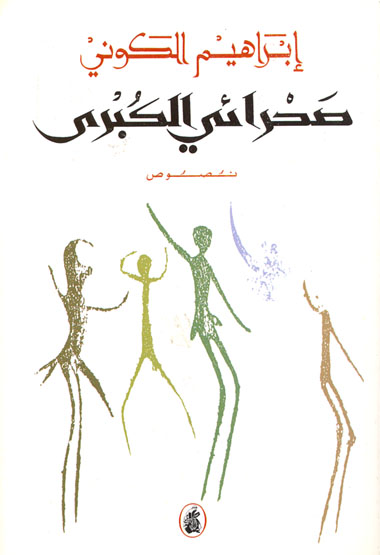
His memory is a world teeming with a vitality that draws in events from the distant past; through a philosophical lens and a brilliant memory, Ibrahim Al-Koni traverses that past. His memory is a repository of lost time, and its outpouring represents the heroic act of reclaiming the metaphysical dimension within the experience of the past—a past imbued with a Romantic spirit, a quality inherent in every endeavor shaped by dreams. The outpouring of his memory is a relentless pilgrimage to reach these very frontiers: the frontiers of the lost dimension. He delves deep into the fringes of this lost dimension, summoning from memory the political figures, writers, and influencers who shaped his literary journey. He recounts meetings, conferences, dialogues, and casual chats, encompassing events spanning a long period. Yet, his memory prunes the experience, offering up the facts as a free sacrifice to Oblivion, retaining nothing of the offering save for that legacy embodied in *dust*—that dust which fittingly opens the first volume of this autobiography, titled *Al-Bayan* (The Manifesto). It is the desert’s final word in the story of a descendant who chose to wander the night’s abyss, captivated by a vision—a vision fueled by dreams, guided by the Void. This Void has been the desert’s intimate companion since time immemorial, for the desert was never anything but a paradise walled by nothingness. Why, then, does memory discard the very facts that constitute its own substance, while clinging to that dust as an abiding obsession in the soul of the night-wanderer?



Reviews
There are no reviews yet.