
Description
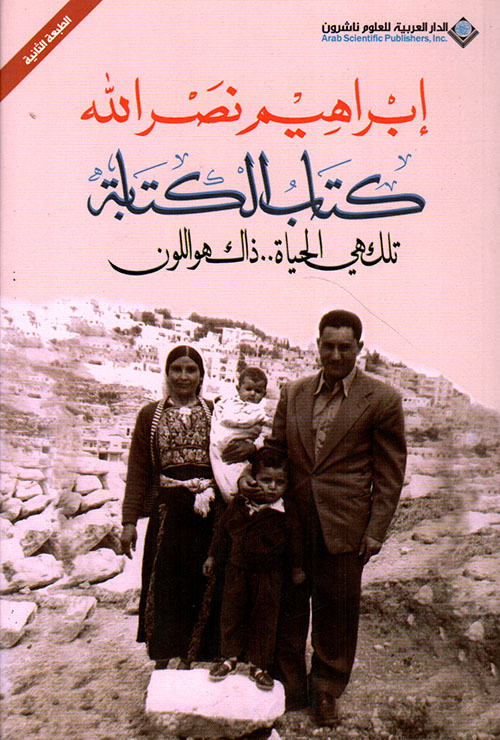
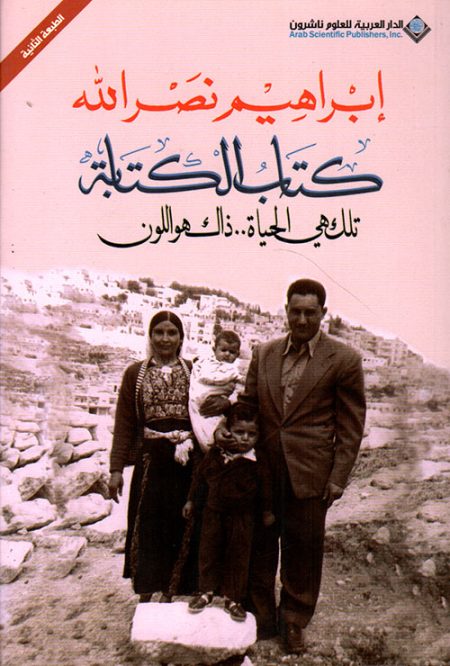
From the Arab Scientific Publishers in Beirut, the writer Ibrahim Nasrallah presents his book, “Writing: That Is Life… That Is Color,” a collection of testimonies illuminating many facets of the anxieties and transformations of the literary experience. It delves into the very questions of writing itself and its techniques, both in poetry and prose, and recounts the stories of numerous texts—how they were born, how they developed until their completion—and explores the relationship between visual arts and literature, as well as the intimate connection with cinema. It also touches upon aspects of life experience intertwined with literature, particularly during the formative years and the beginnings of the Palestinian diaspora and its enduring effects.
Regarding the question of writing and the incompleteness of the title, the writer Ibrahim Nasrallah says: “Like the question of freedom, the question of death and life, and the question of beauty, the question of writing has accompanied humanity’s journey, thus embracing all these questions. For these questions, and others, have always been humanity’s primary concern, troubling humankind since the dawn of their awareness of their existence on this earth. The question of writing becomes even more complex when the writer discovers that it is the question that bears the weight of all questions, including the question of writing itself.” Writing is a laboratory of questions, not merely as a language, but as a way of life. Every writer will emerge with a different conclusion, but the paradox lies in the fact that no one will ever arrive at a definitive answer. As long as there are humans, there will be questions, because the questions of freedom, death, life, and beauty are insatiable and demand answers. All writing does is offer another open-ended response, one that has no direct consequence other than the birth of new questions. Perhaps therein lies the writer’s or artist’s predicament. While science advances, from the invention of the telegraph to the telephone, the fax machine, and finally the internet, writing continues to grapple with impossibilities that cannot be realized and for which it can never find definitive answers. Writing is the profession of discovering new, deeper questions…”. The book was introduced by critic Dr. Muhammad Abdul Qadir in a preface titled “From a Cave in a Mountain… to the Summit of Kilimanjaro: Features of the Personal-Creative Biography of Ibrahim Nasrallah.” In it, he writes: “…Anyone writing a creative biography of a writer like Ibrahim Nasrallah is unsure whether their task is easy or arduous. It is easy, given the breadth of his creative output. Yet, it is arduous at the same time, perhaps for the same reason, as anyone undertaking such a task must be selective and discerning. This is clearly unfair. Whatever the case, this is an attempt to enter the multifaceted world of a creative artist who has produced over forty books to date, encompassing poetry, novels, and studies, not to mention dozens of paintings and sculptures, in addition to numerous press interviews and creative autobiographies. The first thing that strikes the reader of Nasrallah’s creative journey is the diversity of his talents and interests, coupled with a clear boldness in connecting different artistic worlds—a boldness that many shy away from.” The characteristic that represents Ibrahim’s greatest strength—as I believe—is his specific vision, his foresight, and his powerful will to manage his creative self, interacting creatively with himself, his surroundings, and the world. Throughout his artistic journey, Ibrahim possessed a creative project. This project wasn’t born from a predetermined timeline with specific themes, but rather from the power of his vision.
Reviews
There are no reviews yet.