
Description
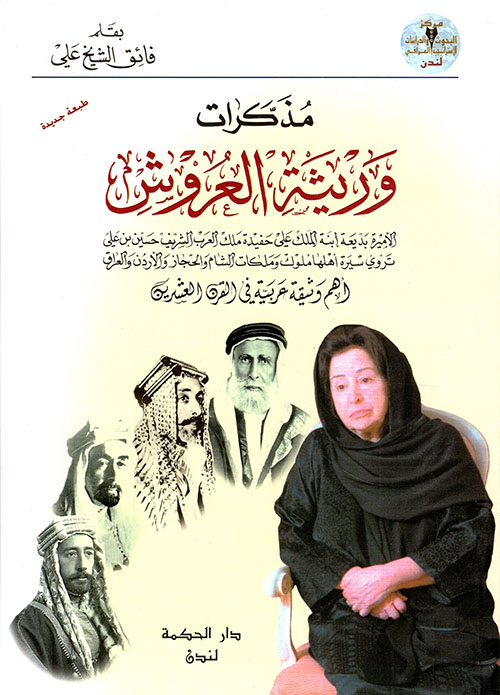
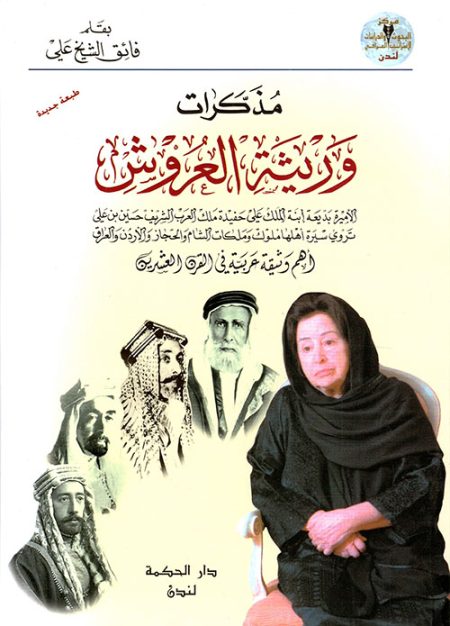
A century has passed since the beginning of the modern political history of the Hashemite dynasty—up to the present day—yet it remains shrouded in ambiguity, injustice, and distortion. It is safe to say that no one would dispute this fact. In 1908, the Ottoman Turks appointed Sharif Hussein bin Ali as the Emir of Mecca. Just eight years later, in 1916, Sharif Hussein launched the Great Arab Revolt against them, eventually becoming King of the Arabs. His three sons—Ali, Abdullah, and Faisal I—went on to rule as monarchs over the Hejaz, Jordan, Syria, and later, Iraq. Their rule came to an end in three of these nations, though they continue to reign in a fourth (Jordan), and they harbor hopes of reclaiming the throne in another (Iraq).
Perhaps the most horrific and gruesome of their ends occurred in Baghdad on July 14, 1958. From the “Al-Rihab Palace massacre,” only one princess from the royal family survived: Princess Badi’a, daughter of King Ali and granddaughter of Sharif Hussein bin Ali. Now eighty-two years old and living in London, she carries the memories, burdens, and sorrows of her grandfather, her father, her royal uncles (Ali, Abdullah, Faisal I, and Prince Zeid), their children and grandchildren—monarchs such as Ghazi, Faisal II, Talal, and Hussein—as well as various other princes and princesses. She recounts these events for history, sharing the story of her brother, Prince Abd al-Ilah; her mother, Queen Nafisa; and her sisters, Queen Aliya and the princesses Abdia and Jalila. These memoirs possess a distinct quality that sets them apart from everything else written or said to date regarding the previous era and its events. Furthermore, they are characterized by a sense of boldness, honesty, and spontaneity. Scarcely a page goes by without some form of critique—at times sharp, at other times light—or a political assessment. A reader might initially assume that the accounts of meetings overshadow the political content; however, they may overlook the fact that these meetings carry political implications and significance—not to mention that the memoirs are, by their very nature, political. Their most unique and defining feature—encapsulated by the description on the cover, “the most important Arab document of the twentieth century”—is the inclusion of 170 photographs, most of which are published here for the first time.



Reviews
There are no reviews yet.