
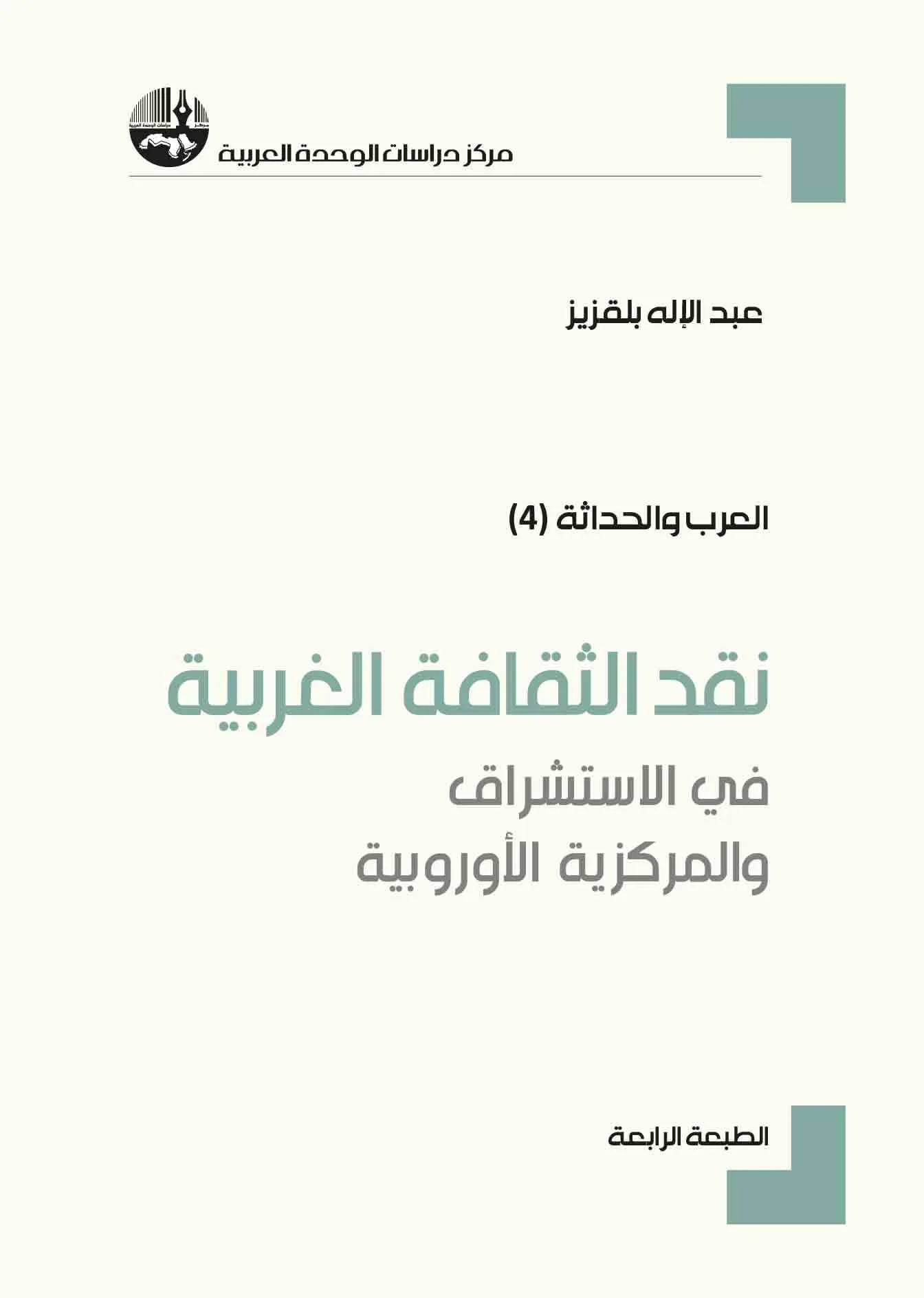
Description
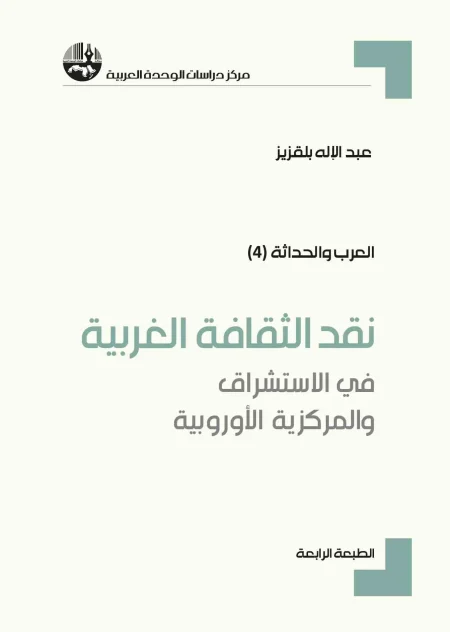
This is the fourth and final book in Dr. Belqaziz’s “Arabs and Modernity” series, the first three parts of which (From Reform to Renaissance, From Renaissance to Modernity, and A Critique of Heritage) have already been published by the Center. This volume is closely related to the previous one (A Critique of Heritage) because both address the same problematic issue in Arab consciousness (self and other) from two different perspectives.
This critique of Western culture examines a current within modern and contemporary Arab thought whose leading figures engage in a critique of both self and other. This critique is not based on a defense of heritage in its entirety, nor on complete assimilation of Western culture. Rather, they are united by a single cultural project: modernity. They do not view modernity as a model of mere reproduction, imitation, or the importation of ready-made ideas, but rather as a universal historical project built by cultures and societies, drawing upon the experiences of others.
The book focuses on two axes of Western culture that have long influenced Europe’s and the West’s relationship with the Other, particularly the Arab Other: Orientalism and Eurocentrism. These represent two of the most important axes of critique of Western culture in the thought of Arab modernists, whose works this book analyzes and critiques. This section is closely related to the preceding one (Critique of Heritage) because both address the same problematic issue in Arab consciousness (self and other) from two different perspectives.
This critique of Western culture examines a current within modern and contemporary Arab thought whose leading figures critique both the self and the other. They do so not from a position of defending heritage in its entirety, nor from a position of complete assimilation into Western culture. Rather, they are united by a single cultural project: modernity. They do not view modernity as a model of mere reproduction, imitation, and the importation of ideas as ready-made commodities, but rather as a universal historical project built by cultures and societies, drawing upon the experiences of others. The book focuses on two axes of Western culture that have long influenced Europe’s and the West’s relationship with the Other, particularly the Arab Other: Orientalism and Eurocentrism. These represent two of the most important axes of critique of Western culture in the thought of Arab modernists, whose works this book analyzes and critiques.

Reviews
There are no reviews yet.