
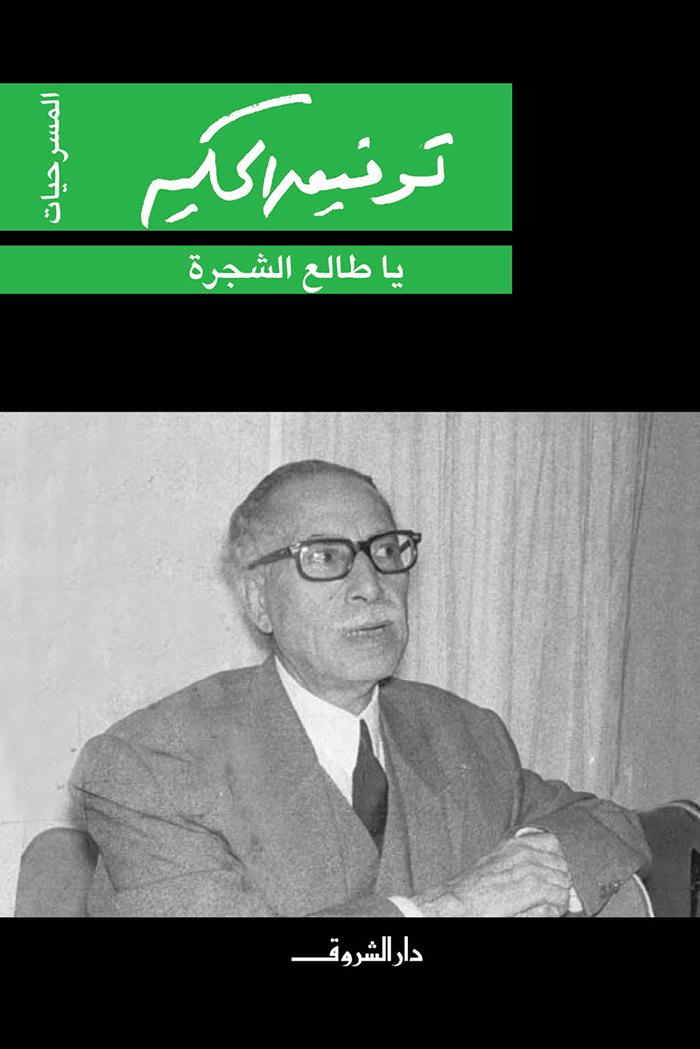
Description
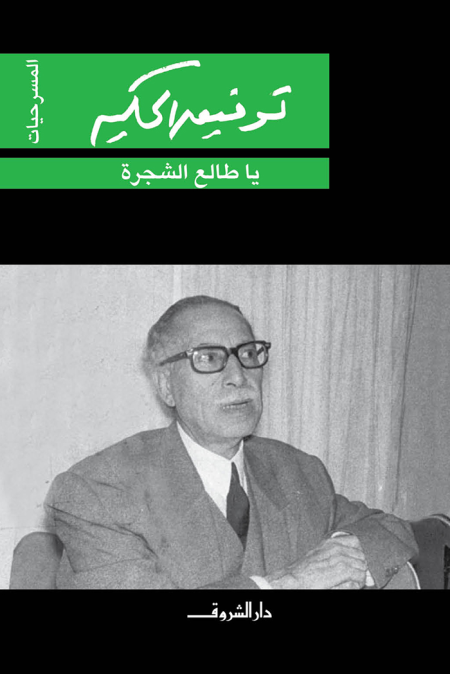
When he wrote “Oh, You Who Climb the Tree” in 1962, he added a new dimension to his pioneering work by venturing into the Theatre of the Absurd. He embarked on a remarkable phase in his theatrical career, attempting to break free from “realism” and move towards experimentation and the “absurdist” movement, seeking its roots in Egyptian folklore.
Al-Hakim drew the characters of his play from different worlds: the dervish, the sheikha Khadra (or lizard), and the tree. The dervish came from the world of the spirit, the world of the mystics, where no eye has seen, no ear has heard, and no human mind has conceived. As for the tree, it represents the plant world, which gives meaning to life. From these initial threads, the playwright skillfully weaves together the narrative of a man and a woman, living together in a single dwelling for nine years. Each inhabits their own world: the wife preoccupied with the expected child, the husband with his verdant tree and its anticipated fruit. Between these two worlds, things intertwine, and the dialogue, masterfully crafted by the playwright, unfolds. We discover that what can be said about the tree and its anticipated fruit also applies to another tree, awaited by the wife, whose first fruit she herself had brought down… “Ya Tale’ El Shajara” (Oh, You Who Climb the Tree) was a breakthrough in the history of Arab theater.


Reviews
There are no reviews yet.