
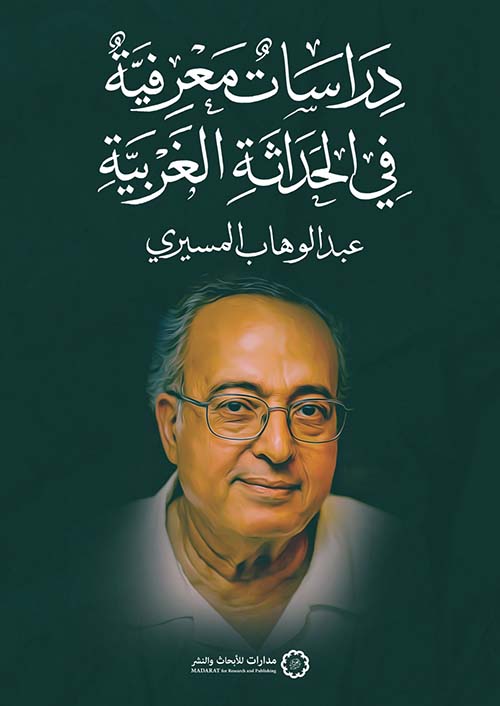
Description
“Secularism is not merely the separation of religion from the state, but a reformulation of humanity and the universe within a comprehensive material framework.”
In this book, Al-Messiri seeks to dissect the epistemological structure of Western modernity and examine the intellectual models produced by modern philosophy from the Enlightenment to its manifestations in the contemporary era.
He focuses on the fact that this modernity was founded on the separation of knowledge from value and on the transformation of humanity and the world into material entities subject to the laws of conflict and self-interest, which he calls the “Darwinian model.” The book is not limited to abstract intellectual critique; it also attempts to demonstrate how this vision has been reflected in the details of social, political, and cultural life, both in the West and the East. Main Themes:
A) Modernity as a Modernity Separated from Value
Al-Messiri argues that Western modernity is based on instrumental reason, which makes utility and efficiency the supreme standard.
Unlike other modernities (such as Islamic modernity or Eastern spirituality), the Western model has abolished metaphysical references and moral values. The result: the transformation of humanity into a “natural human” governed by instincts and interests, rather than a spiritual or moral being.
This is what leads Al-Messiri to call it “Materialistic modernity” or “Darwinism,” because its essence is conflict and competition, not integration.
B) Pivotal Concepts in Modernity
Natural Man:
The human being who has been separated from absolutes and values, and redefined solely according to his biology and material needs.
→ This appears in liberal philosophy and capitalist economics, where the individual is reduced to a being who pursues self-interest.
Enlightenment:
An intellectual movement that raised the banner of reason and liberation from revelation and religion.
→ Al-Masiri criticizes it because it elevated reason to the status of absolute, but ultimately produced a limited, instrumental reason.
Secularism:
For Al-Masiri, it is not merely the separation of religion from the state, but a comprehensive system that reshapes all of existence (thought, values, behavior) within a material framework.
→ Here, his distinctive critique of the idea of “comprehensive secularism” versus “partial secularism” emerges.
C) The Problem of Subject and Object
The central problem that Al-Masiri sees is: How are ideas related to reality? And how do we understand the relationship between the particular and the universal?
In the Western humanities, the tendency toward fragmentation has prevailed: Focusing on the part rather than the whole, form rather than content, ideas in isolation from context.
Al-Masiri suggests that the solution lies in complex epistemological models that allow us to see human phenomena in their interconnectedness and complexity, not in their excessive fragmentation.
d) The Impact of Western Modernity on the East and West
In the West:
Human relations have transformed into competitive and conflictual relationships, and science has become detached from values, leading to the spread of consumerism and alienation.
In the East:
The Western model was imported as the sole model of modernity, resulting in cultural dualism and a disruption of social and intellectual structures.
→ Al-Masiri here raises the need for an alternative modernity that benefits from the West’s technological achievements but rejects its separation from values.
e) Appendices and Additional Studies
The book includes appendices that explore complex models and how to employ them in the study of human phenomena.
These models attempt to transcend rigid dichotomies: subject/object, private/public, ideas/reality.
Al-Masiri presents practical epistemological models for studying social phenomena, moving beyond material determinism or rigid explanations. Reductionism.




Reviews
There are no reviews yet.