
Description
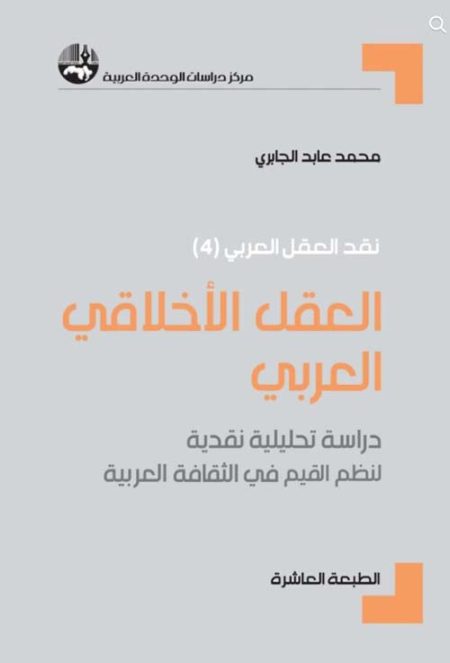
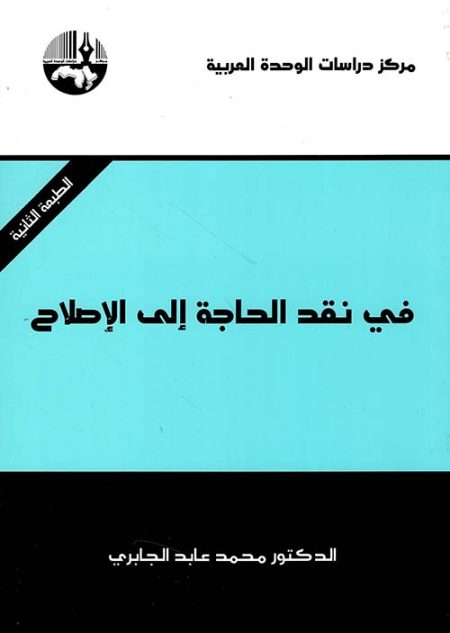
This book falls within the same intellectual framework that Mohammed Abed al-Jabri has followed since the 1980s, remaining within the realm of contemporary Arab thought. It addresses issues related to democracy, identity, Islam, the West, religion and the state, civil society, secularism, and so on. All of these fall within the context of the challenges of renaissance facing the Arab world, challenges that have remained essentially the same since the 19th century, acquiring new dimensions and diverse forms at each stage.
Accordingly, al-Jabri argues that the issues of renaissance in modern and contemporary Arab thought are pulled in two directions: the first concerns a renewed examination of issues rooted in the Arab and Islamic heritage; the second relates to our understanding and assimilation of the issues of modernization and modernity, which are rooted in modern and contemporary European thought.
Therefore, Al-Jabri, within a framework of interconnected methodology imbued with comparative logic, examines the concept of reform to define its substance and prevent it from remaining shrouded in ambiguity. This is because the “reform” the American administration seeks to establish in the Middle East obstructs the path to genuine reform.
As for the phrase “critique of the need for reform,” it aims to view reform not as a call originating from abroad, nor as a slogan hastily adopted by a group of internal forces, but rather as a “need.” If we first identify the need or needs that justify making reform a demand in the Arab and Islamic world, we can then define its desired objectives and determine the means to achieve them. Since this concerns a concept that defines the vision and methodology,
and is itself defined by them, it is essential to reach a consensus, first and foremost, on the content of this concept, whether within the Arab-Islamic or European framework. Thus, Al-Jabiri returns to classical texts to observe the limited definition and specificity of the term “reform” within them, while the situation is entirely reversed in the European context, where reform means “reshaping” or “giving something a different form.”
In the Arab and Islamic worlds, reform is related to the corruption of something, both in substance and form. Therefore, the issue of reform boils down to restoring it to its state before the corruption occurred, that is, returning it to its previous condition. However, the idea of reform suffers from being shackled by suspicions, so every innovation introduced by reform is considered by some to be a heresy, and “every innovation is a heresy.”

Reviews
There are no reviews yet.