
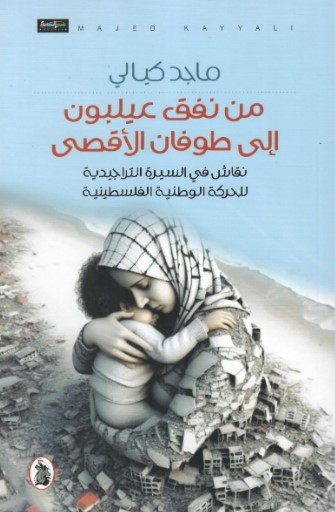
Description
The book comprises five chapters (223 pages). The first addresses the challenges and representations surrounding the rise and decline of Palestinian nationalism. The second discusses the centrality of armed struggle to the ideology and entity-building of the Palestinian national movement, as well as the resulting repercussions. The third chapter is dedicated to examining the complexities of Palestinian national identity and the evolution of how Palestinians perceive themselves as a people. The fourth chapter focuses on the “Al-Aqsa Flood” offensive and the genocidal war Israel waged against the Palestinians—viewed as a new *Nakba* (catastrophe). The fifth chapter presents conclusions drawn from the preceding chapters—including a concluding section—offering proposals for a new political and struggle-oriented strategy for the Palestinian national movement.
The author posits that the contemporary Palestinian national movement achieved the bulk of its successes during its first decade—specifically by the mid-1970s—after which it entered a state of crisis, stagnation, and impasse, culminating in the Gaza *Nakba*.
This book is part of the author’s ongoing analysis, review, and critique of the Palestinian national movement—covering its political, military, and entity-building experiences across Jordan, Lebanon, and the occupied territories. It is the fourth work of its kind by the author in this field, following *The Aborted Revolution: Studies on the Challenges of the Palestinian National Experience* (2013); *Fatah at 50: A Critical Reading of the Trajectory of a National Movement* (2016); and *The Debate on Arms: A Critical Reading of the Challenges of the Palestinian National Experience*.

Reviews
There are no reviews yet.