
Description
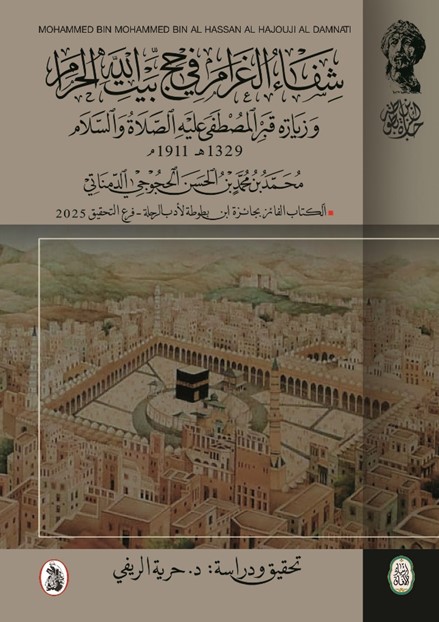
This travelogue is considered a significant historical and literary text, belonging to a critical period in Moroccan history: the era of the French Protectorate. The text conveys the general contours of the intellectual elite’s aspirations for a renaissance in Morocco, reflecting the broader intellectual revival then underway in the Arab East—an influence that quickly extended to Morocco.
The journey began in Fez, Morocco, on August 2, 1911, passing through various cities and ports—including Tangier, Ksar El Kebir, Marseille, Suez, and Haifa—before reaching Mecca and Medina. The return leg took the traveler to Damascus, Beirut, Port Said, Alexandria, Marseille (once again), Gibraltar, and Tangier, finally concluding back in Fez on April 31, 1912. Lasting approximately eight months, the journey offers valuable insight into the performance of the Hajj pilgrimage under the French Protectorate. It reveals the extent of French intervention in organizing the pilgrimage—primarily exercised through control over maritime navigation and, consequently, the supervision of pilgrimage voyages. Competition in this sector was particularly fierce between French and English shipping companies. One of the most notable Hajj-related measures overseen by foreigners at the time was the quarantine system; the author underwent this process and, as he notes, witnessed some of its shortcomings firsthand.
It is worth noting that religious matters—and the Hajj pilgrimage in particular—were a significant preoccupation for colonial authorities within their spheres of influence. Finally, Al-Hajjuji’s travelogue reveals the esteemed status of Moroccan scholars in the Hijaz and illustrates the intellectual cross-fertilization between scholars of the Islamic West and East. The traveler himself participated in this exchange through meetings with various scholars in Mecca, Medina, Damascus, and Beirut—engagements that included the mutual granting of scholarly licenses (*ijazah*). These relationships among scholars and jurists remained vibrant well into the early twentieth century.




Reviews
There are no reviews yet.