
Description
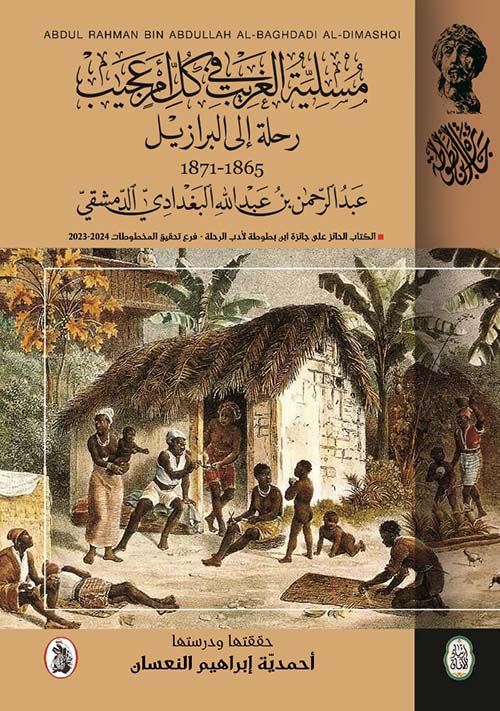
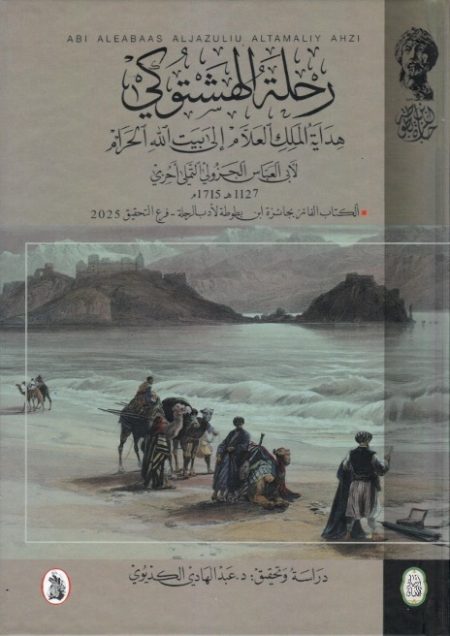
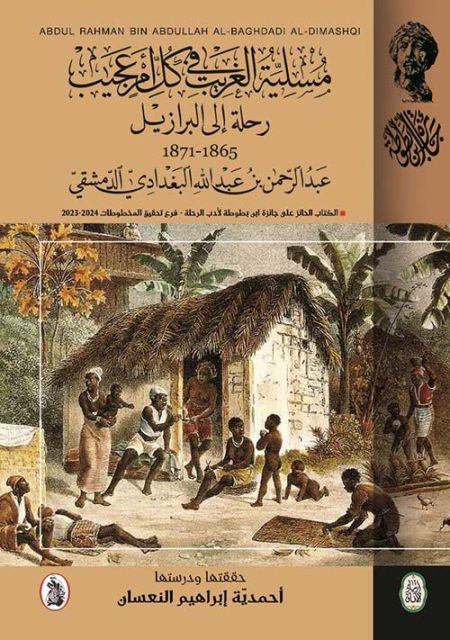
This account of a journey stands apart from other travelogues written by Arabs and Muslims visiting Europe and the West; it is characterized by a notably lower level of tension. The “West” encountered here differs from the European experience, as the relationship is far less fraught—leaning more toward friendship than hostility.
The author—a judge, man of letters, and poet—was born in Baghdad and raised in Damascus. He developed a deep passion for travel and exploration, and was profoundly affected by the 1860 unrest in Damascus, enduring its long-term consequences. He left Damascus for Baghdad, then traveled to Constantinople, where he secured a position as an *imam* (chaplain) within the Ottoman naval fleet. In 1865—during the reign of Sultan Abdülaziz (1861–1876)—he set sail with the fleet, thanks to a recommendation from the naval commander, Kapudan Mehmed Ateş Pasha.
Two warships, the *Bursa* and the *Izmir*, departed from Istanbul, traversing the Mediterranean Sea and crossing the vast Atlantic Ocean. They arrived in Rio de Janeiro, Brazil, in 1866, where they were warmly welcomed by the Brazilians. The country’s ruler, Emperor Dom Pedro II (1825–1891), even visited the vessels while they were docked in the harbor. After a brief stay, the two ships departed, leaving Imam al-Baghdadi behind in Rio. He took on the task of teaching a community of African Muslims how to read the Quran and the fundamentals of their faith—a role he assumed in response to their request for a teacher, an imam, and a companion. For nearly three years, he traveled between Rio de Janeiro, Bahia, and Pernambuco. He left Brazil in 1869, and on his return journey, he passed through cities in Spain and North Africa, as well as Jeddah and Mecca—where he performed the Hajj—and visited Medina. He then returned first to Damascus to reunite with his family, and subsequently to Constantinople, where he recorded these observations in Arabic. The diary was first published in a Turkish translation in 1871, printed via a lithographic press in Istanbul. It serves as an invaluable document, offering unique accounts, observations, and social and political insights—notably regarding the Muslims of Brazil and their leadership of an uprising in the 1830s to liberate themselves, inspired by earlier revolts of enslaved people: “I was told that a war broke out between them and the Christians, and the Black [Africans] sought to take control of the lands from them; however, the Christians emerged victorious. It became clearly established that the root of this conflict lay with a group of Muslims among the Black communities.”
The researcher was awarded the Ibn Battuta Prize for Travel Literature for her scholarly edition of the Arabic text. Her work—comprising both the text and an analytical study—serves as a precious addition to the corpus of travel literature.
A literary and historical documentation of a nineteenth-century journey to Brazil, which chronicles the conditions of the country and the customs of its inhabitants, while shedding light on… …on the lives of Muslims of African descent and their religious and social practices, while describing the cities visited and observations made during the journey—both outward and return—across several countries.

Reviews
There are no reviews yet.