
Description
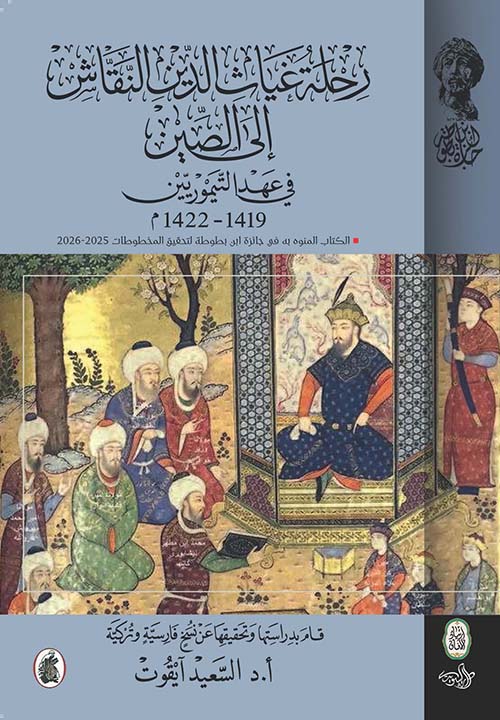
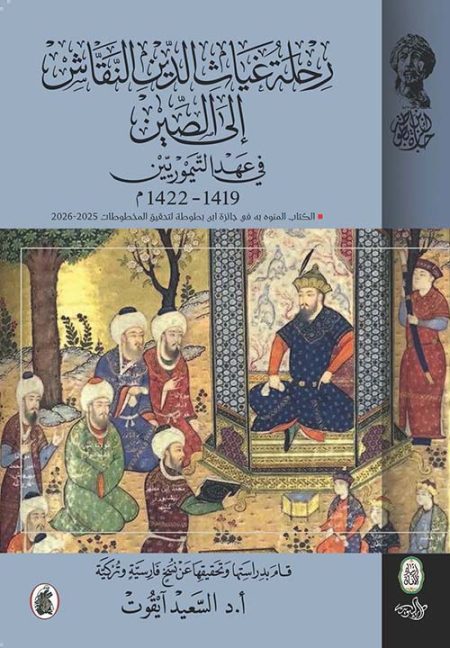
The book *The Journey of Ghiyath al-Din al-Naqqash to China during the Timurid Era (1419–1422 AD / 822–825 AH)*—translated from Persian and Turkish manuscripts into Arabic, edited, and analyzed by Professor Dr. Ali al-Said Ayqut—is an exceptional and meticulously crafted scholarly achievement. It possesses significant academic value, characterized by a sound methodology in translation, critical editing, analysis, and the collation of various manuscript and printed versions, all supported by an exhaustive review of sources, studies, and references.
The account of Ghiyath al-Din al-Naqqash serves as a rare and valuable historical, literary, and social document. It sheds light on the nature of relations between China and the lands of the Islamic world in Western Asia during the ninth century AH (fifteenth century AD). The narrative depicts conditions in China under the Ming Dynasty—specifically during the reign of the Yongle Emperor (1403–1424 AD)—thereby enriching the picture previously presented by earlier Arab and Muslim travelers, such as Abu Dulaf al-Khazraji (d. 390 AH / 1000 AD), Abu Zayd al-Sirafi (in 227 AH / 851 AD), and Ibn Battuta (in the eighth century AH / fourteenth century AD), among others.
This journey was undertaken as part of an exchange of official missions between China and the Islamic states of Western Asia; it was commissioned by the Timurid prince Baysungur, son of Shah Rukh. Notably, the expedition coincided with the voyages of Zheng He to the lands of the West. …Asia and the Islamic lands—as if in response to those friendly Chinese overtures.
Reviews
There are no reviews yet.