
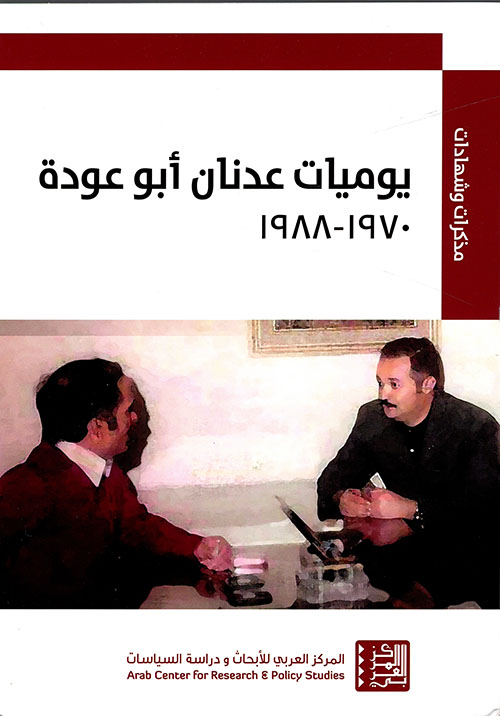
Description
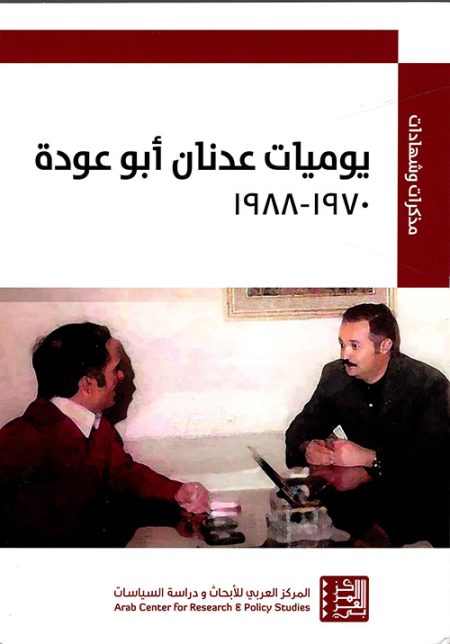
The introductory dialogue presents a profile of Adnan Abu Oudeh, outlining his intellectual leanings, political affiliations, and the positions he held during that period. It also clarifies certain issues touched upon in the diaries without going into exhaustive detail.
The diaries chronicle the political situation in Jordan and its internal and external relations during the years they were written. They convey a distinct perspective on the events that shaped the region at the time—and their repercussions within Jordan—presenting them through the eyes of a politician. While a reader might not necessarily agree with every viewpoint expressed, the diaries undoubtedly provide crucial pieces that complement and intersect with the broader picture of the era.
The diaries address numerous significant milestones. Prominent among these is the October 1973 War—covering the deliberations held before, during, and after the conflict, the resulting outcomes, and the specific roles played by the “confrontation states.” Also covered is the 1974 Rabat Summit and the tensions surrounding its resolutions—most notably the declaration of the Palestine Liberation Organization (PLO) as the sole legitimate representative of the Palestinian people and the release of Jordan from its responsibilities regarding the West Bank. The text further examines the subsequent developments, particularly the constitutional and internal amendments required to align with those resolutions. Finally, the diaries offer insight into the regional landscape, addressing the Iran-Iraq War—its causes and repercussions, as well as the divergent stances taken by Arab nations regarding the conflict. They also cover the Israeli-Arab peace negotiations, Kissinger’s regional tours—including the meetings he held and the proposals he tabled—and the impact of all this on the Palestinian cause.
Abu Odeh’s diaries are replete with political opinions, ideas, observations, and analyses offered as commentary on unfolding events and the stances taken by various internal and external parties. These reflections reveal his personal position and the role he played—evident in his proposal for developing the National Union, his memorandum regarding the release of detainees held for links to *fedayeen* organizations, his analyses of decisions emerging from conferences and meetings with Arab and foreign leaders, and his thoughts on a peaceful settlement for the Middle East issue. Furthermore, while chronicling daily events, the diaries illustrate the mechanisms behind the formation of successive governments during that period, shedding light on how these governments were influenced by—and in turn influenced—the prevailing situation.
Ultimately, the significance of these diaries lies in the fact that they were recorded contemporaneously with the events themselves, based on the author’s direct participation, rather than being reconstructed later—a process often prone to the conflation of facts with emotions, subsequent attitudes, and even anachronisms, given the well-known vagaries of memory and their impact on documentation and interpretation. They stand as a historical document of their era, offering answers to issues whose repercussions are still felt today, while simultaneously raising numerous questions and inquiries regarding them. It reflects the author’s perspective at the time of writing—views that may or may not align with their current opinions. Like any other written work, it is also open to scrutiny, criticism, and discussion.




Reviews
There are no reviews yet.